
Science
Pumpkin-derived enzyme weakens peanut proteins' binding to allergy antibodies in lab tests
Peanut allergy is one of the most serious food allergies and can lead to sudden, life-threatening reactions.

AI Summary
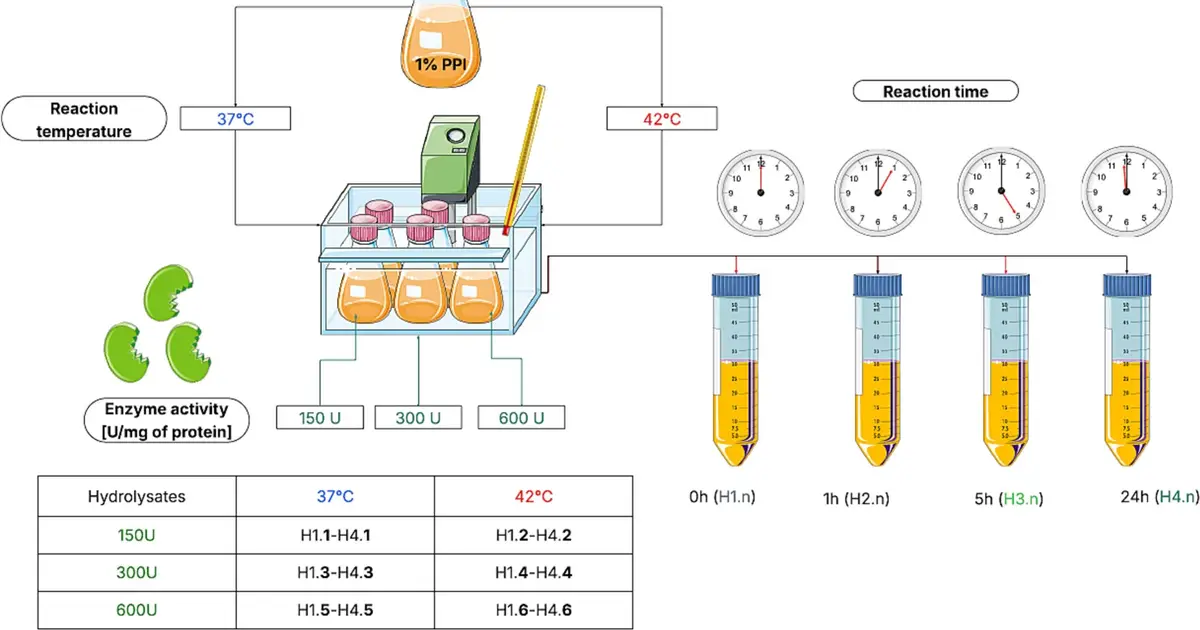
Researchers at Wroclaw University of Environmental and Life Sciences and Wroclaw Medical University tested a natural enzyme from figleaf gourd (Cucurbita ficifolia) to see if it could diminish peanut protein recognition by allergy‑triggering antibodies. In laboratory hydrolysis experiments, the enzyme markedly lowered the immunoreactivity of peanut proteins, suggesting a reduced ability to bind allergy antibodies. The findings, published in Food Chemistry, indicate a possible route toward foods with lower allergenic potential, though no consumer‑ready product has been created yet.
AI summaries can be wrong sometimes—always verify important details using the source article.
How AI & Automation are usedMore from Science
Continue reading recent Science coverage
- Why earwigs infected by parasitic worms head towards waterContinue reading
- Engineers teach spacecraft to 'dream' their way to the space stationContinue reading
- Sparse layers of 10-nanometer silver particles boost CO production from CO₂Continue reading
- A real-time look inside spacecraft heat shields during extreme heat conditionsContinue reading
Support HappeningNow
Independent AI-powered news analysis is reader-supported. Your contribution helps cover infrastructure, summaries, and continued platform development.
Support HappeningNow