
Science · 6 views
This oddball reflective lava world is challenging to understand
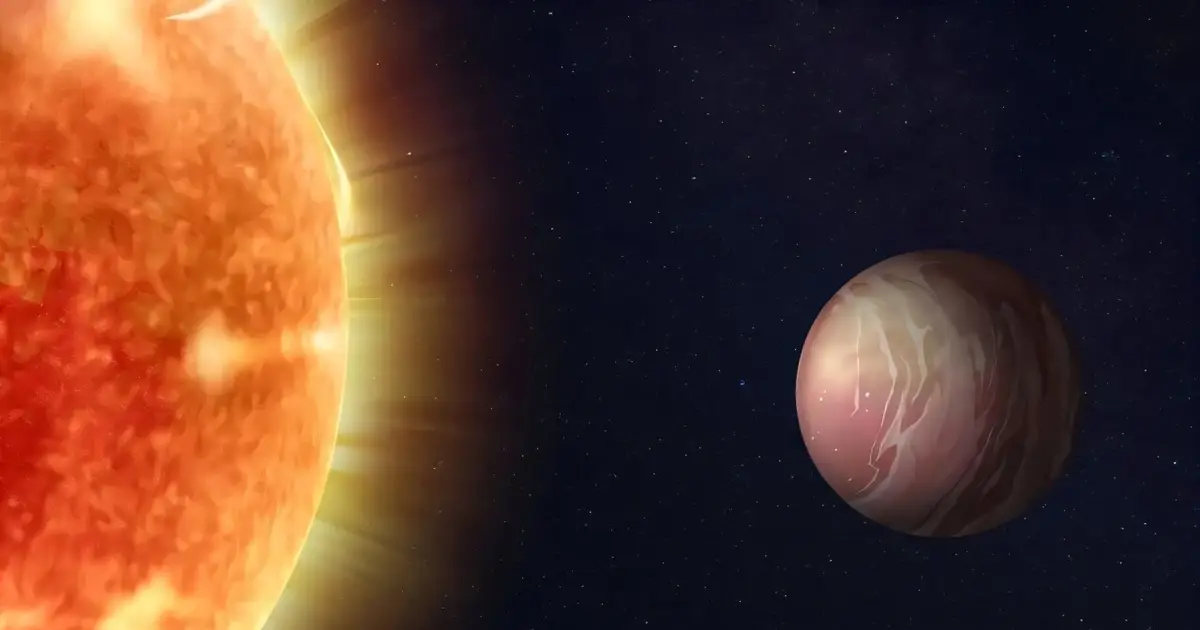
Among Kepler and TESS's many surprising exoplanet discoveries are the ultra-short-period (USP) planets. These planets move very quickly and complete an orbit in less than 24 hours.

AI Summary
Ultra‑short‑period (USP) exoplanets orbit their stars in less than 24 hours, making them the fastest known planets. They are found by missions such as Kepler and TESS. Because they lie so close to their host stars, USPs receive intense stellar radiation that can strip away any atmospheres they once had. Ancient astronomers named Mercury after the swift messenger god, but even Mercury’s 88‑day orbit is slow compared to these rapidly rotating worlds. The loss of atmospheres is a key consequence of the extreme conditions these planets endure.
AI summaries can be wrong sometimes—always verify important details using the source article.
How AI & Automation are usedMore from Science
Continue reading recent Science coverage
- Seeing Your Pain Through an Evolutionary Lens May Ease Depression, Early Trial FindsContinue reading
- Looking for bats after dark can help science—and change how we see themContinue reading
- Giant virus yields potassium channel gene that illuminates complex protein evolutionContinue reading
- The Eerie True Story of The Nightmare Face Haunting The InternetContinue reading
Support HappeningNow
Independent AI-powered news analysis is reader-supported. Your contribution helps cover infrastructure, summaries, and continued platform development.
Support HappeningNow