
Science · 3 views
Chemists develop AI tool to convert human ingenuity into life-enhancing enzymes
Many have voiced concerns that artificial intelligence will take jobs away from humans.

AI Summary
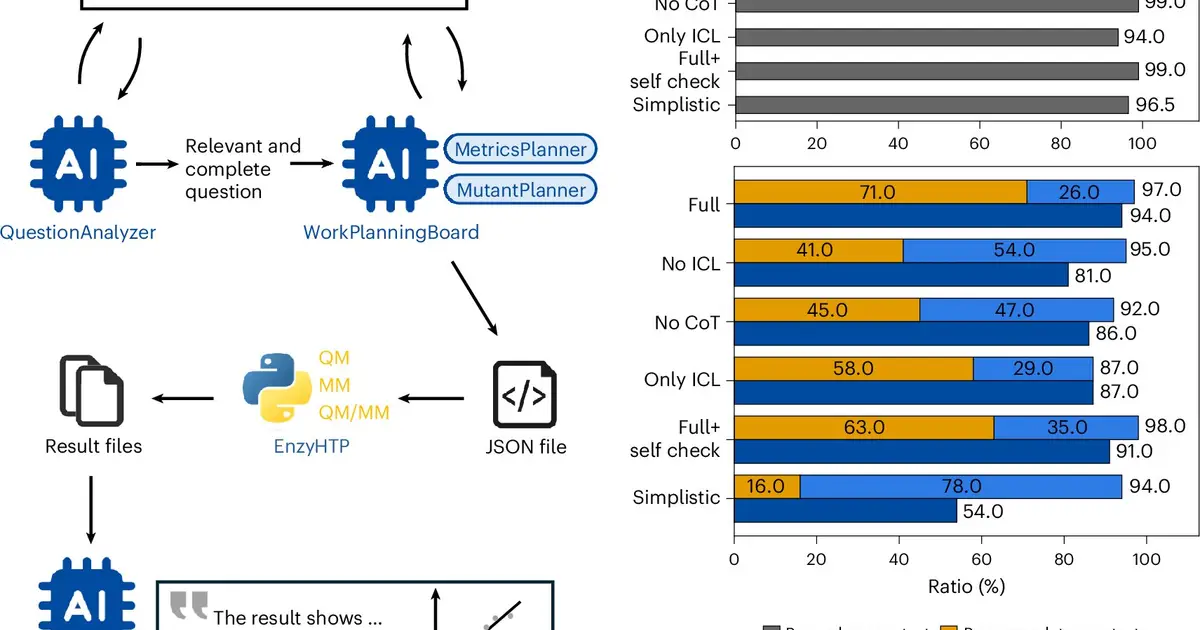
Assistant professor of chemistry Zhongyue (John) Yang, together with former doctoral student Qianzhen Shao—now a postdoc at Stanford—and other collaborators, has built an AI system called MutexaGPT to accelerate enzyme customization. The tool accepts plain‑English, intuition‑driven requests, then uses large‑language‑model agents to infer missing data, construct physics‑based models and generate actionable design proposals. Engineered enzymes produced with MutexaGPT could streamline the synthesis of new medications, preserve nutrient‑rich foods and aid polymer recycling to cut plastic waste. The research appears in Nature Computational Science.
AI summaries can be wrong sometimes—always verify important details using the source article.
How AI & Automation are usedMore from Science
Continue reading recent Science coverage
- Scientists Recovered 22,000-Year-Old Human DNA From Cave DirtContinue reading
- Dogs May Smell a Complete Stranger's Seizure Without Ever Being Trained, Study FindsContinue reading
- Calling species 'invasive'—and culling them—isn't done lightly. But it matters to Australia's threatened speciesContinue reading
- Ultracold atoms simulate hard-to-observe matter-antimatter pair productionContinue reading
Support HappeningNow
Independent AI-powered news analysis is reader-supported. Your contribution helps cover infrastructure, summaries, and continued platform development.
Support HappeningNow