
Science
The Antarctic's only two flowering plants reveal opposing strategies for surviving long-term warming
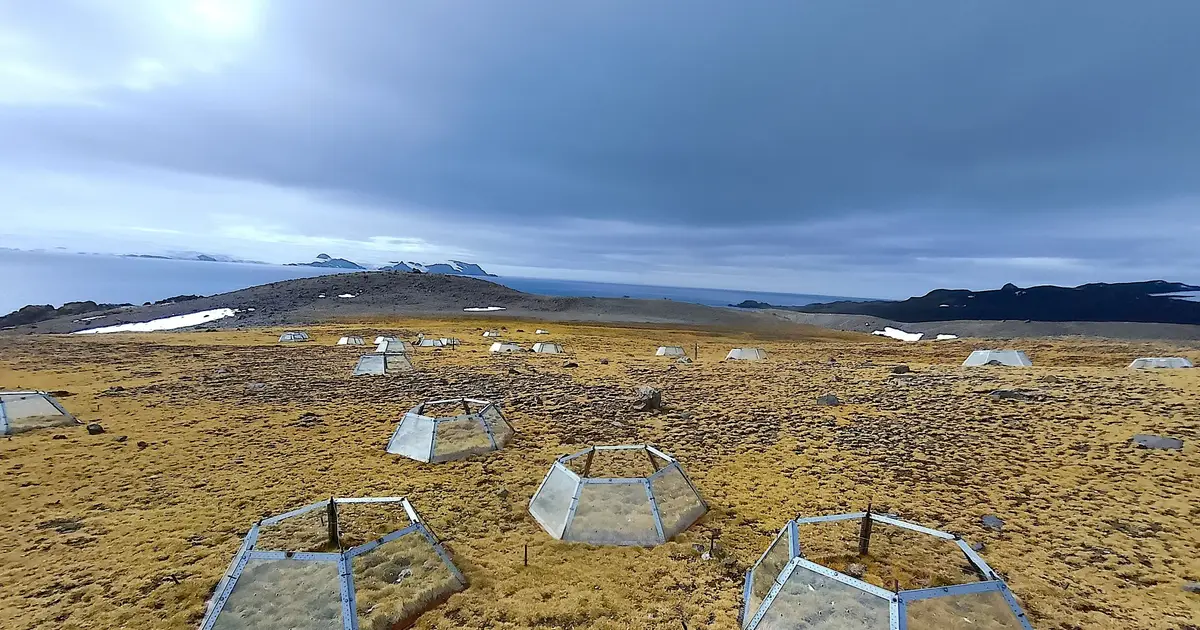
A team of Chilean and Spanish researchers has published the results of one of the longest-running in-situ warming experiments in maritime Antarctica in the journal Physiologia Plantarum.

Summary
A team of Chilean and Spanish researchers has published the results of one of the longest-running in-situ warming experiments in maritime Antarctica in the journal Physiologia Plantarum. The experiment exposed the Antarctic continent's only two native vascular plant species, Deschampsia antarctica (Antarctic hairgrass) and Colobanthus quitensis (Antarctic pearlwort), to passive warming chambers (Open Top Chambers, OTCs) for seven years.
AI summaries can be wrong sometimes—always verify important details using the source article.
How AI & Automation are usedMore from Science
Continue reading recent Science coverage
- Starch-based sensor changes color to indicate moisture in food packagingContinue reading
- Bee-made propolis boosts an antifungal drug against yeast pathogens in lab testsContinue reading
- How ChatGPT served up false information before the 2024 electionContinue reading
- New AI methodology powers the latest million dollar listContinue reading
Support HappeningNow
Independent AI-powered news analysis is reader-supported. Your contribution helps cover infrastructure, summaries, and continued platform development.
Support HappeningNow