
Health · 39 views
How losing the 'guardian of the genome' can damage DNA and drive cancer
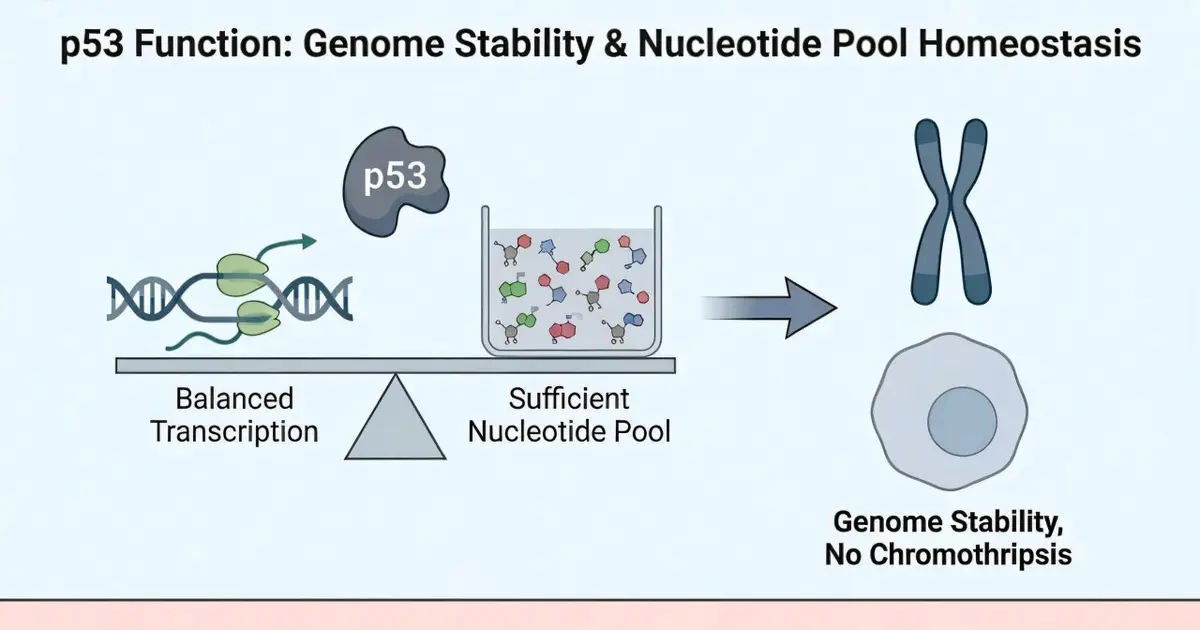
A new study finds that when p53, one of the most important cancer-protecting genes, stops working, cells produce too much RNA and consume excessive amounts of the building blocks needed to copy their DNA.

AI Summary
A study published in *Molecular Cell* shows that loss of the tumor‑suppressor gene p53 causes cells to overproduce RNA and consume too many nucleotides needed for DNA replication. The resulting nucleotide shortage disrupts replication, leading to DNA damage, chromosomal instability, and large genetic alterations. These changes can promote cancer development. The findings uncover a new mechanism by which p53 maintains genome integrity and suggest new directions for studying cancers lacking functional p53.
AI summaries can be wrong sometimes—always verify important details using the source article.
How AI & Automation are usedMore from Health
Continue reading recent Health coverage
- Reprogramming tumor microenvironment could improve prospects for treatment of pancreatic cancerContinue reading
- Tegoprubart preserves kidney function better than tacrolimus in first-time transplant patients, trial suggestsContinue reading
- Melanoma vaccine reduces death or cancer recurrence by 42%Continue reading
- Chinese Drug Shows Benefit in HER2-Low Breast CancerContinue reading
Support HappeningNow
Independent AI-powered news analysis is reader-supported. Your contribution helps cover infrastructure, summaries, and continued platform development.
Support HappeningNow