
Science · 2 views
How a plant's refusal to self-pollinate could help India grow more of its own cooking oil
Most people assume plants reproduce through whatever pollen happens to land on them. This is not true.

Story Brief
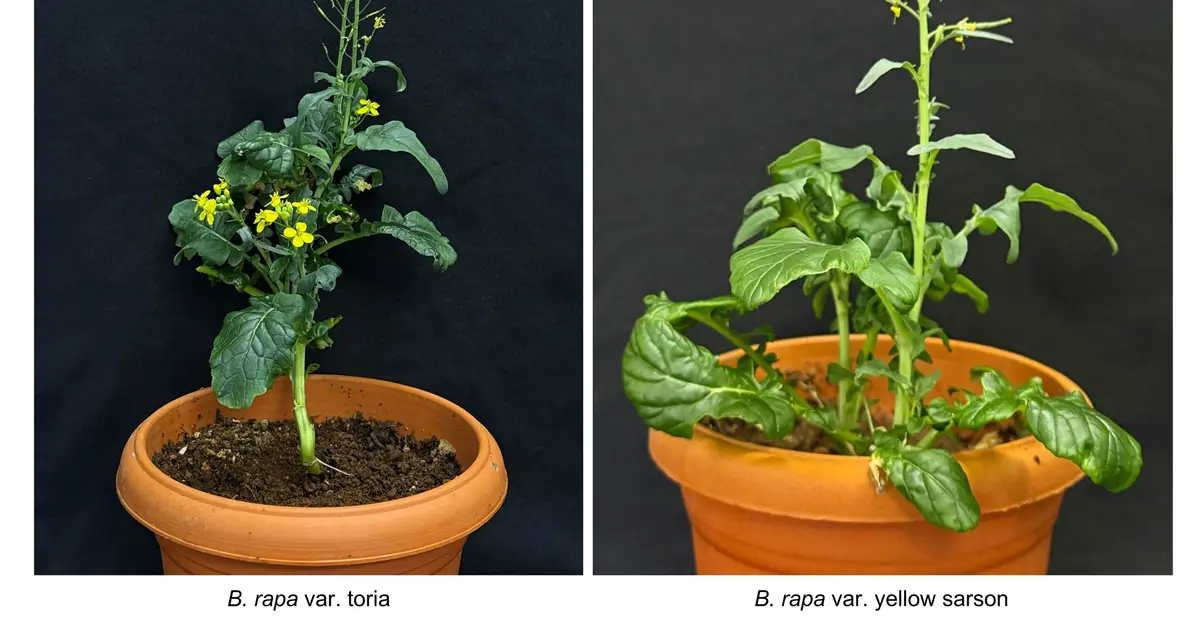
Most people assume plants reproduce through whatever pollen happens to land on them. This is not true. A collaborative research initiative involving the Indian Institute of Technology Gandhinagar (IITGN) has mapped and functionally tested the genes that control a natural "self-rejection" system in two widely grown Indian oilseed crops, Brassica rapa (mustard) varieties toria and yellow sarson. This system governs the molecular "lock-and-key" mechanism in certain mustard plants that allows them to reject their own pollen.
Read full article on PHYSAI summaries can be wrong sometimes—always verify important details using the source article.
How AI & Automation are usedMore from Science
Continue reading recent Science coverage
- Predictive tools can confuse rare mutations with dangerous onesContinue reading
- Early mammals weren't all loners—some may have lived in pairs alongside the dinosaursContinue reading
- Peppermint Oil Lowered Blood Pressure by 8 Points in Just 20 Days, Trial FindsContinue reading
- Malaysia starts cloud seeding to help clear toxic hazeContinue reading
Support HappeningNow
Independent AI-powered news analysis is reader-supported. Your contribution helps cover infrastructure, summaries, and continued platform development.
Support HappeningNow