
Science
Gold nanoplasmonic chip tracks L-DOPA response in Parkinson's 'mini-brains'
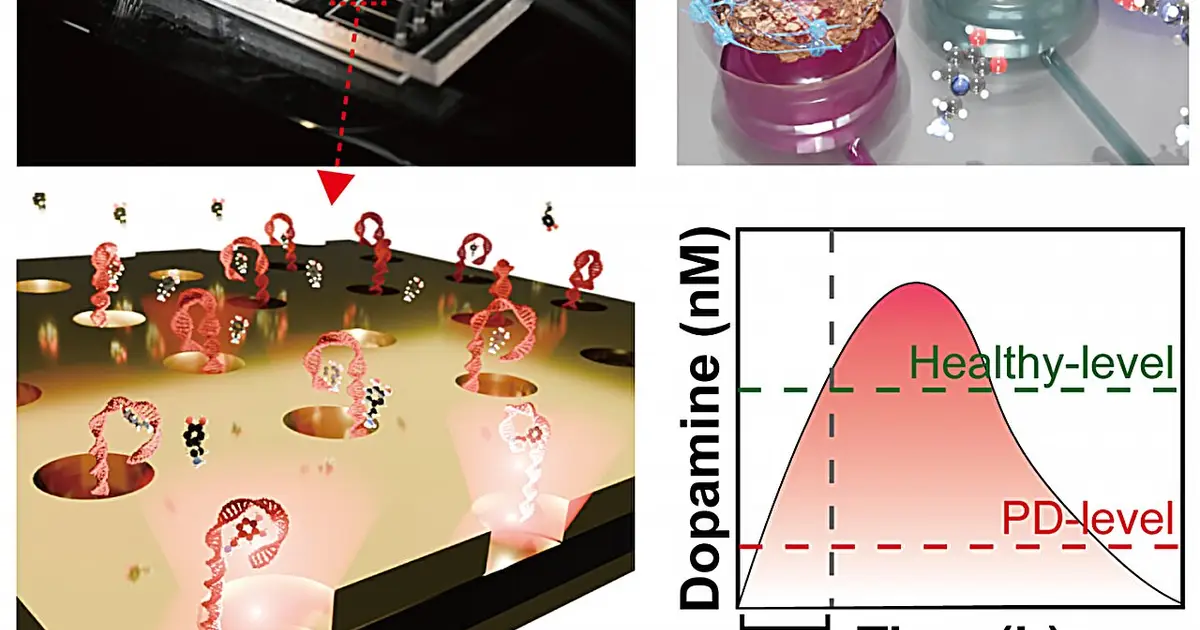
Researchers have developed an organoid-on-a-chip technology that verifies the efficacy of Parkinson's disease treatments in real time.

Summary
Researchers have developed an organoid-on-a-chip technology that verifies the efficacy of Parkinson's disease treatments in real time. The technology combines a stem cell–derived "mini-brain" with a nanoplasmonic sensor engineered to maximize light–matter interaction. An organoid is a "three-dimensional mini-organ" grown from human stem cells to closely resemble an actual organ.
AI summaries can be wrong sometimes—always verify important details using the source article.
How AI & Automation are usedMore from Science
Continue reading recent Science coverage
- Astronomers detect radio signals coming from an exoplanet for the first timeContinue reading
- Can a long-lived seabird evolve fast enough to avoid extinction under a changing climate?Continue reading
- Hot spring amoeba breaks record for heat tolerance of complex lifeContinue reading
- Fire amoeba breaks heat tolerance record for complex lifeContinue reading
Support HappeningNow
Independent AI-powered news analysis is reader-supported. Your contribution helps cover infrastructure, summaries, and continued platform development.
Support HappeningNow