
Science
Hot spring amoeba breaks record for heat tolerance of complex life
A tiny, single-celled organism can thrive at temperatures that would kill all other known complex life.

AI Summary
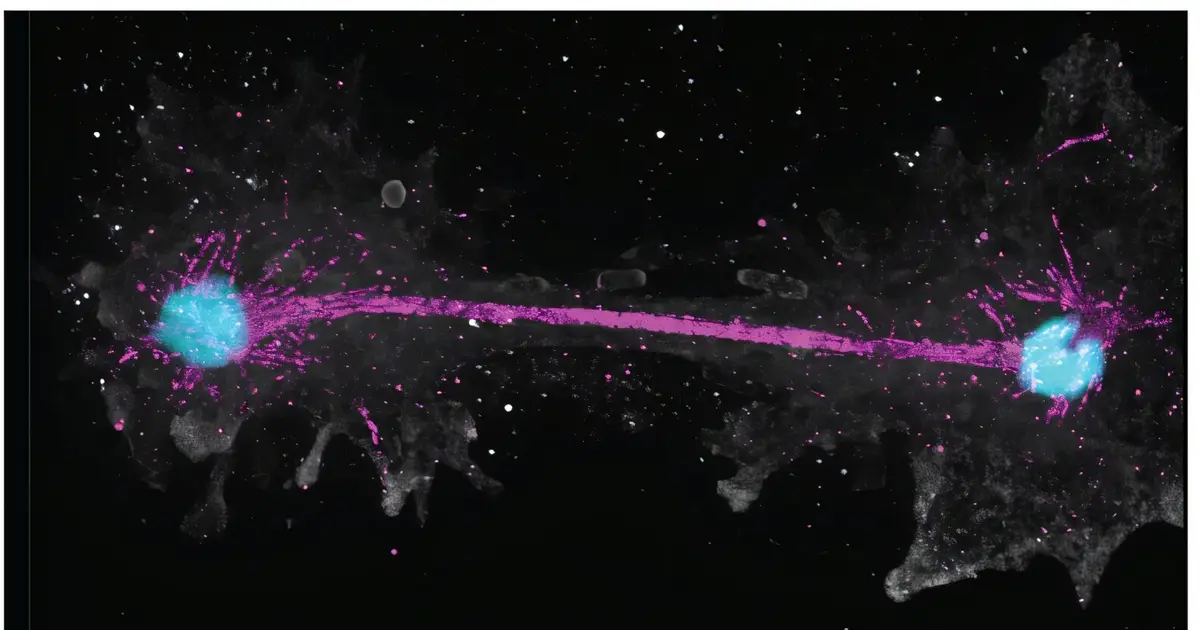
Scientists have identified a new species of amoeba that can eat and reproduce in hot spring water up to 63 °C (145 °F) in California’s Lassen Volcanic National Park. The organism can survive temperatures as high as 70 °C (158 °F) by changing shape and forming a protective outer layer. The study, published in *Cell*, expands the known limits of heat tolerance for complex life. Corresponding author Angela Oliverio of Syracuse University noted that the discovery suggests other eukaryotes may exist that survive even higher temperatures.
AI summaries can be wrong sometimes—always verify important details using the source article.
How AI & Automation are usedMore from Science
Continue reading recent Science coverage
- Can a long-lived seabird evolve fast enough to avoid extinction under a changing climate?Continue reading
- Fire amoeba breaks heat tolerance record for complex lifeContinue reading
- A tiny chariot fitting reveals Egyptian glass reached Iron Age BritainContinue reading
- Five ways teachers can respond to residential school denialism in the classroomContinue reading
Support HappeningNow
Independent AI-powered news analysis is reader-supported. Your contribution helps cover infrastructure, summaries, and continued platform development.
Support HappeningNow