
Science · 1 views
Bone strength study reveals new clues about human evolution
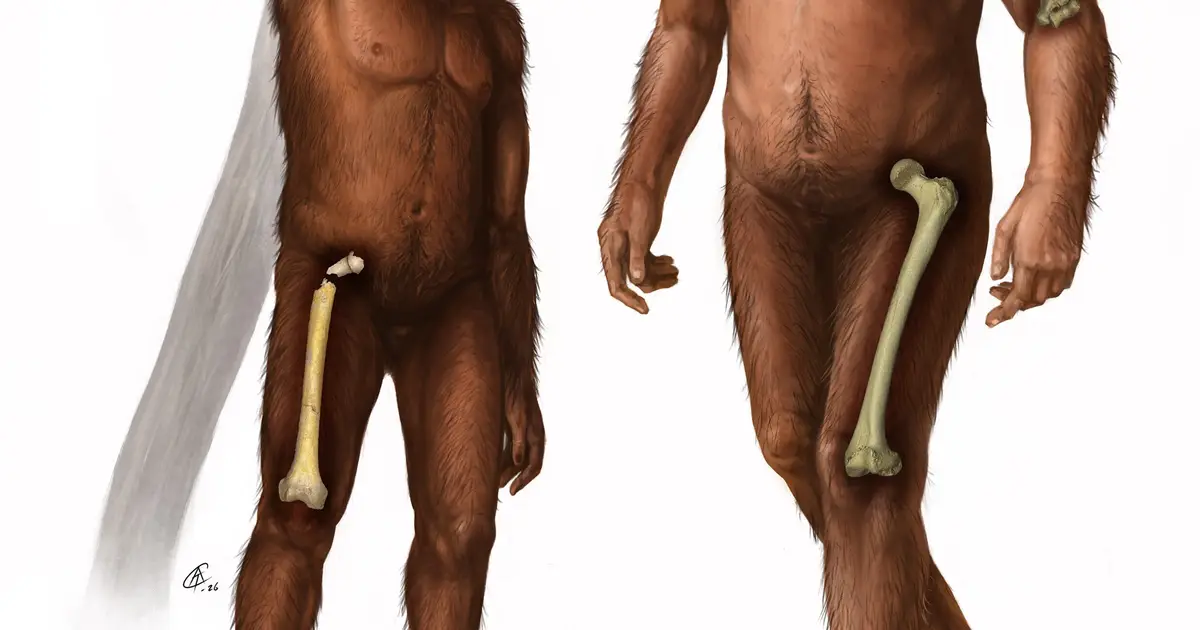
Bipedalism, or walking on two legs, is one of the key features that distinguishes humans from other apes.

AI Summary
Scientists examined fossilized bones from two groups of early human ancestors—Australopithecus and early Homo—to investigate when and why bipedalism emerged. The study found that the bone structure of these species shows adaptations for walking on two legs, suggesting a shift from arboreal to terrestrial life. The evidence indicates that this transition occurred earlier than some theories propose, providing new insight into the evolutionary timeline of human locomotion.
AI summaries can be wrong sometimes—always verify important details using the source article.
How AI & Automation are usedMore from Science
Continue reading recent Science coverage
- Sliding droplets point to charging mechanism beyond mobile ionsContinue reading
- Dogs show human-like brain activity when they restrain themselvesContinue reading
- Mi Goreng Noodle Packet Found Nearly 2 Kilometers Beneath The SeaContinue reading
- Toilet pellets may help us flush less and save waterContinue reading
Support HappeningNow
Independent AI-powered news analysis is reader-supported. Your contribution helps cover infrastructure, summaries, and continued platform development.
Support HappeningNow