
Science · 47 views
A vicarious calibration model enables quantitative applications of Fengyun-3 satellite ocean color data
Ocean color remote sensing is a vital tool for monitoring global ocean carbon sinks and primary productivity.

AI Summary
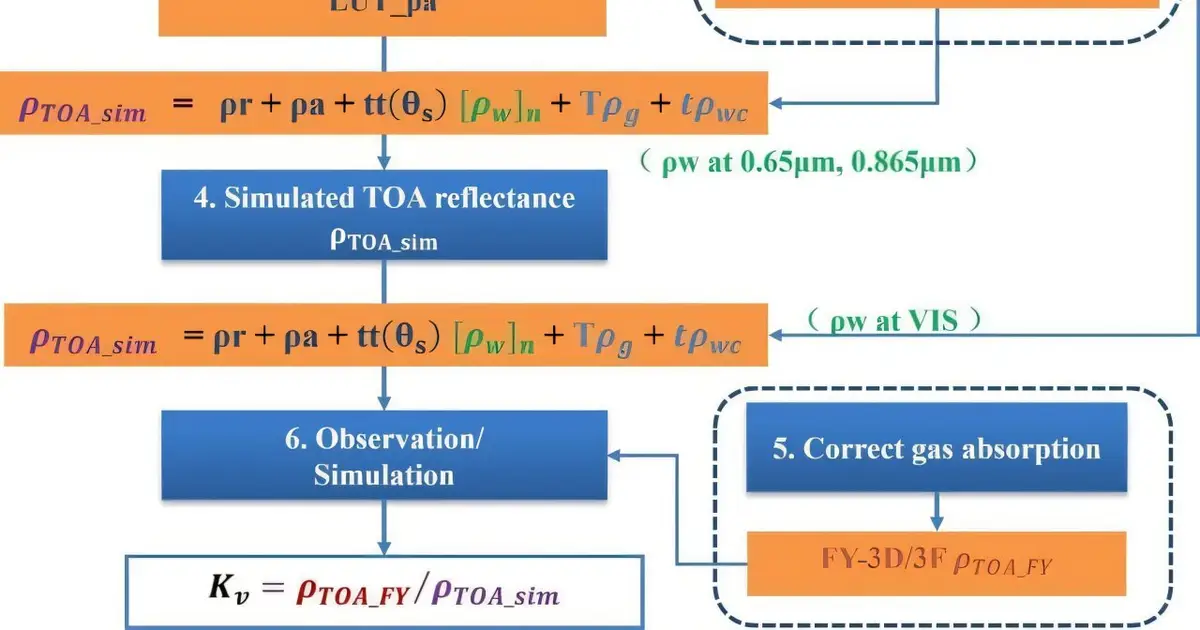
Researchers have introduced a vicarious calibration model to improve the quantitative use of ocean color data from China’s Fengyun‑3D and Fengyun‑3F satellites, which carry Medium Resolution Spectral Imager sensors. The model addresses the “weak signal, strong interference” problem that hampers accurate on‑orbit calibration, where marine signals constitute only about 10 % of the total received signal. By providing a targeted calibration approach, the method aims to reduce uncertainties that currently limit monitoring of global ocean carbon sinks and primary productivity.
AI summaries can be wrong sometimes—always verify important details using the source article.
How AI & Automation are usedMore from Science
Continue reading recent Science coverage
- Grooming-related messages reach almost two-thirds of childrenContinue reading
- Chesapeake Bay underwater grasses increase 7%, buoyed by gains in salty watersContinue reading
- Why does Southeast Asia keeps breathing the same haze—and can ASEAN do more to stop it?Continue reading
- Tiny backpacks reveal the secret, sometimes circuitous migrations of small songbirdsContinue reading
Support HappeningNow
Independent AI-powered news analysis is reader-supported. Your contribution helps cover infrastructure, summaries, and continued platform development.
Support HappeningNow