
Science · 1 views
Why a wetter Tibetan Plateau still faces 'hot-dry' extremes: The roles of ENSO and the North Atlantic
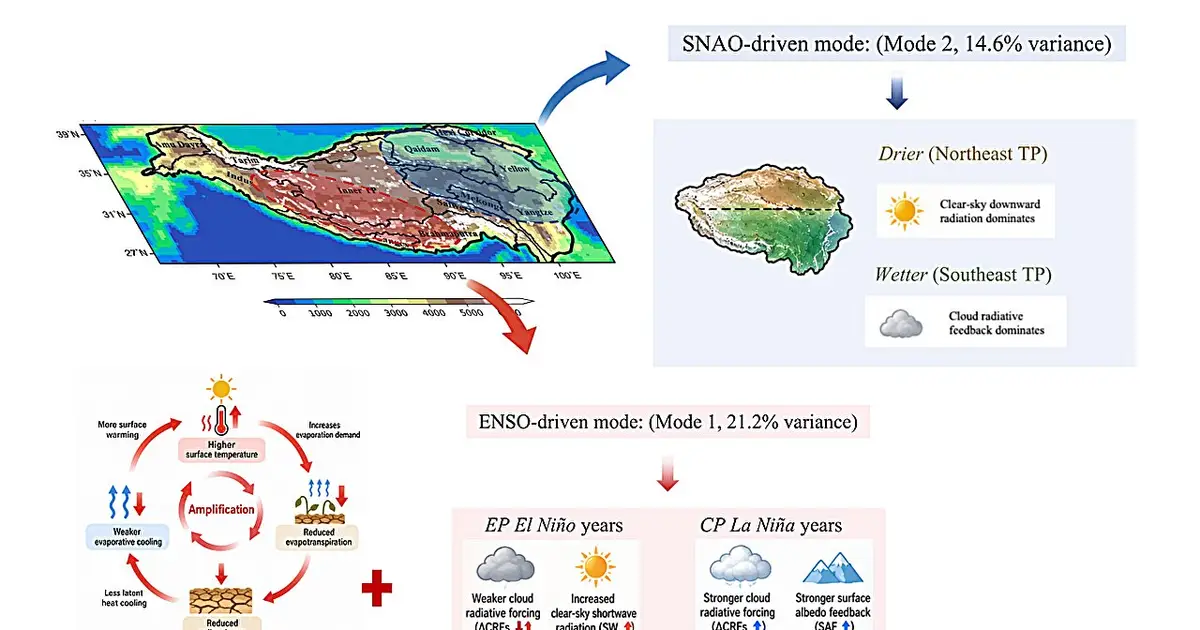
Since the 1950s, the Tibetan Plateau has experienced pronounced warming and wetting. However, an overall shift toward wetter conditions does not necessarily mean that drought risk has diminished.

AI Summary
Since the 1950s, the Tibetan Plateau has warmed and received more precipitation overall. Despite this wetter trend, the region has seen an increase in compound hot‑dry events, where high temperatures and drought occur together. These combined conditions have become a growing climate risk across the plateau, indicating that higher rainfall does not automatically reduce drought vulnerability.
AI summaries can be wrong sometimes—always verify important details using the source article.
How AI & Automation are usedMore from Science
Continue reading recent Science coverage
- Tiny backpacks reveal the secret, sometimes circuitous migrations of small songbirdsContinue reading
- Scientists Had People Eat Tomato Paste For 3 Months. Their Brain Scans Looked Different.Continue reading
- Some black holes grow much faster than their galaxiesContinue reading
- One of the oldest known 3D animal fossils found in Norwegian sheep fieldContinue reading
Support HappeningNow
Independent AI-powered news analysis is reader-supported. Your contribution helps cover infrastructure, summaries, and continued platform development.
Support HappeningNow