
Science · 11 views
A distant galaxy may host two supermassive black holes merging into one
Galaxy mergers are common in the early universe. Many large galaxies that we see now were assembled through mergers.

Summary
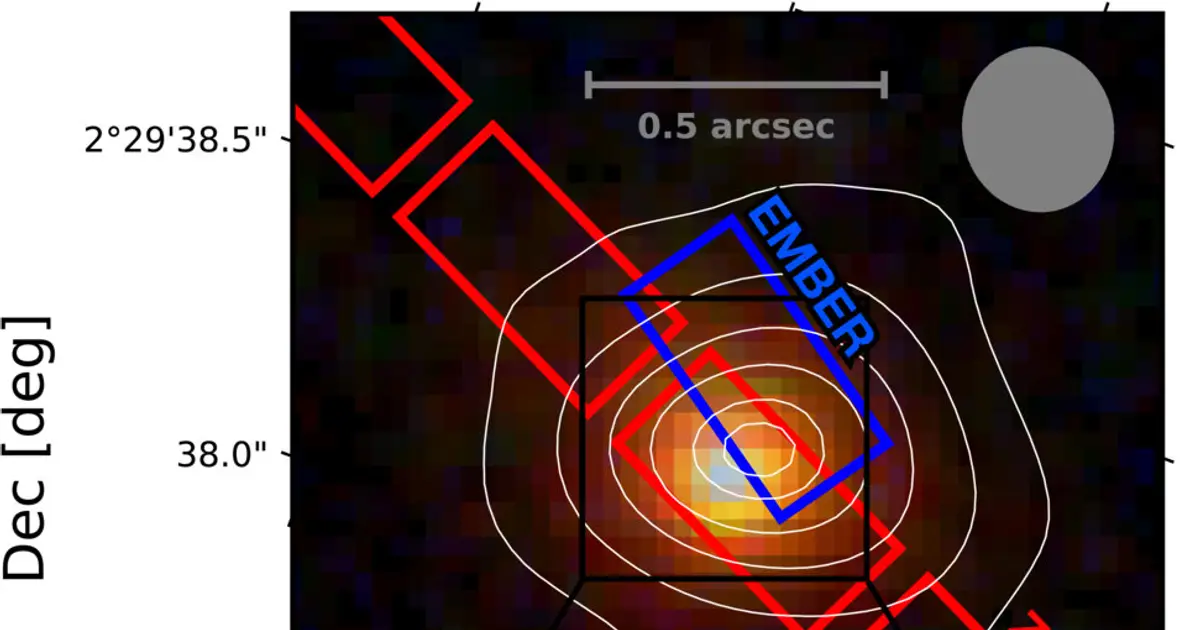
Galaxy mergers are common in the early universe. Many large galaxies that we see now were assembled through mergers. When two galaxies merge, their central supermassive black holes can sink toward the new center and end up in a binary system, orbiting each other. Astronomers have found possible evidence for one such pair of supermassive black holes in AzTEC-1, a massive galaxy observed as it appeared about 1.4 billion years after the Big Bang.
AI summaries can be wrong sometimes—always verify important details using the source article.
How AI & Automation are usedMore from Science
Continue reading recent Science coverage
- Bumblebee workers housed alone lived three times longer than their nestmatesContinue reading
- A Major Carbon Storage Project Has Been Linked to Magnitude-4 Earthquakes 35 Kilometers AwayContinue reading
- Tiny black holes could have heated the early universe more quietly than expectedContinue reading
- Rare 2,500-year-old iron bars from Germany help trace Celtic Europe's most widespread ingotsContinue reading
Support HappeningNow
Independent AI-powered news analysis is reader-supported. Your contribution helps cover infrastructure, summaries, and continued platform development.
Support HappeningNow