
Science · 50 views
Tiny black holes could have heated the early universe more quietly than expected
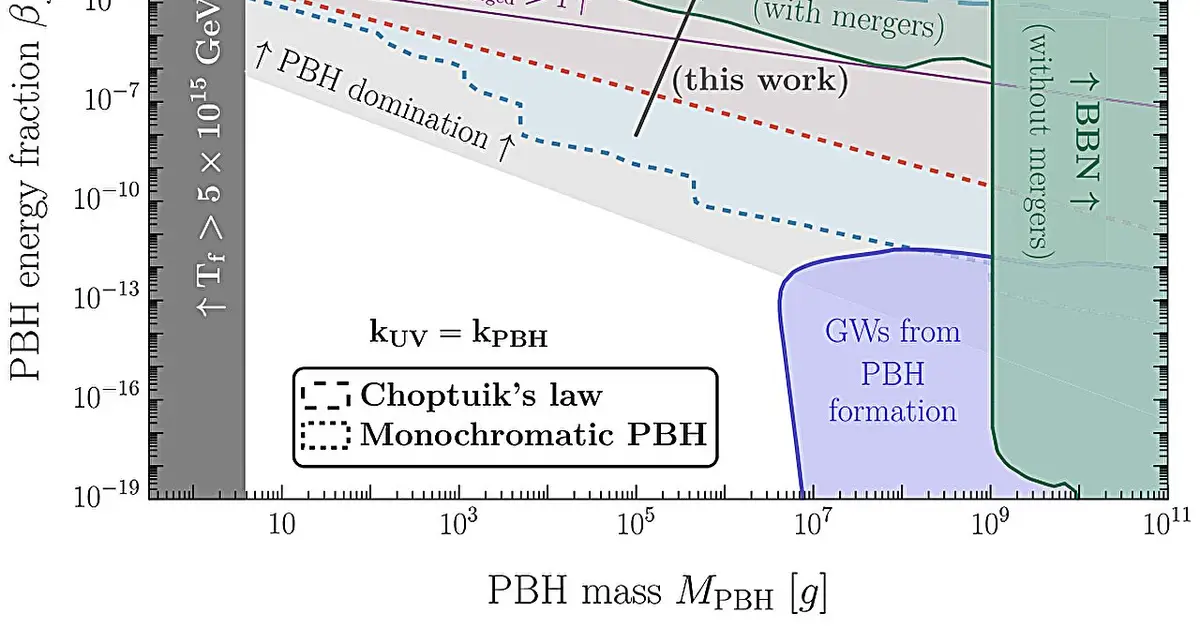
A team of astrophysicists has determined that a population of tiny black holes could have heated the early universe as they evaporated, leaving a much fainter gravitational-wave trace than some models have predicted.

AI Summary
A group of astrophysicists has calculated that a population of tiny black holes could have heated the early universe as they evaporated, producing a much fainter gravitational‑wave signal than some earlier models suggested. The study, published in Physical Review Letters by Yann Gouttenoire, Nicholas Leister, and Pedro Schwaller, shows that including the expected spread of black‑hole masses weakens a previous constraint that had ruled out certain scenarios of early‑universe heating. The new calculations imply that these evaporating black holes would leave a subtler imprint on the gravitational‑wave background than previously thought.
AI summaries can be wrong sometimes—always verify important details using the source article.
How AI & Automation are usedMore from Science
Continue reading recent Science coverage
- Rare 2,500-year-old iron bars from Germany help trace Celtic Europe's most widespread ingotsContinue reading
- Lyme Disease Bacteria Leaves Lasting Immune Changes in Bone Marrow of Mice, Study FindsContinue reading
- Proposed experiment with ultracold atoms could settle a decades-old debate about quantum particle arrival timesContinue reading
- One Small Change to a Keto Diet Flipped Weight Loss Into Weight Gain in MiceContinue reading
Support HappeningNow
Independent AI-powered news analysis is reader-supported. Your contribution helps cover infrastructure, summaries, and continued platform development.
Support HappeningNow