
Science · 55 views
LEDs let archaeologists see the past in a new light
An archaeological excavation is a little like eating a layered cake: Once you have removed a layer, you cannot put it back. The problem becomes even trickier if two layers look almost exactly the same.

AI Summary
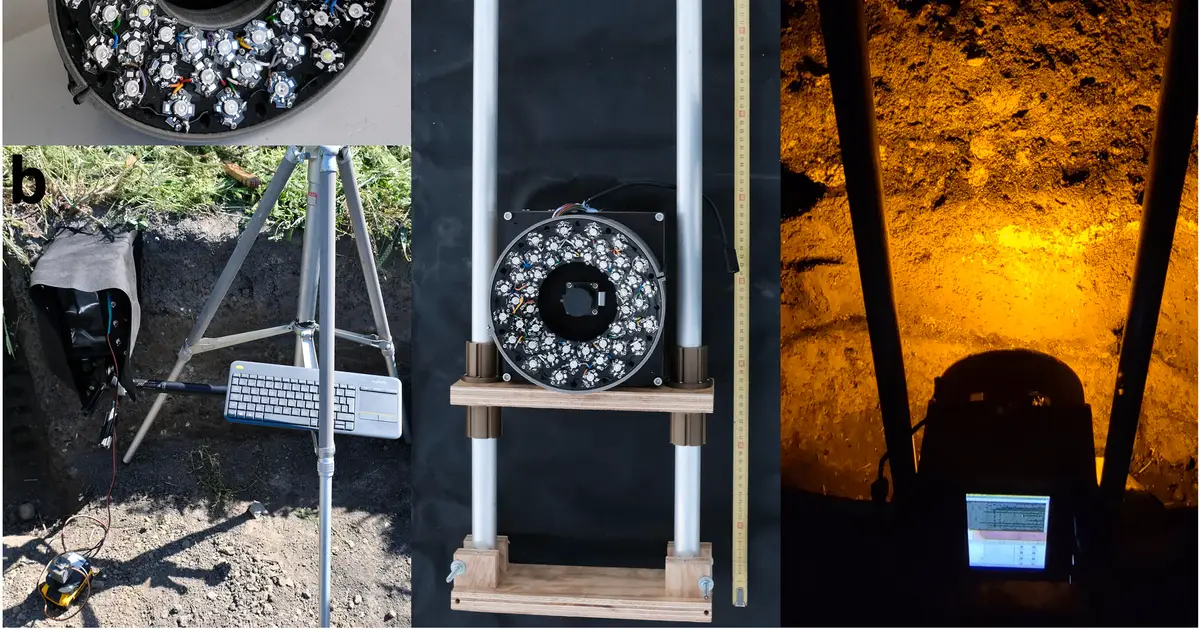
Researchers from Aarhus University and Moesgaard Museum in Denmark have created a low‑cost multispectral imaging system for archaeological sites. The prototype replaces ordinary white light with LEDs at 16 wavelengths, spanning near‑ultraviolet, visible, and near‑infrared light. By illuminating the soil with these varied wavelengths, archaeologists can detect subtle differences between layers that appear similar under normal lighting. The system offers a non‑destructive way to examine subsurface features before excavation begins.
AI summaries can be wrong sometimes—always verify important details using the source article.
How AI & Automation are usedCoverage Context
More from Science
Continue reading recent Science coverage
- Miniature Ball Lightning Created in a Lab Could Help Solve a Centuries-Old MysteryContinue reading
- Surveying the genetic battlefield to uncover the rules of rapid evolutionContinue reading
- NASA's Perseverance Just Broke The Off-World Driving Record, While Mostly Steering ItselfContinue reading
- Physically Touching Your Dog Can Help Protect You From Upcoming Stress, Study SuggestsContinue reading
Support HappeningNow
Independent AI-powered news analysis is reader-supported. Your contribution helps cover infrastructure, summaries, and continued platform development.
Support HappeningNow