
Science · 5 views
What makes us human? Researchers compare brain development in humans and great apes
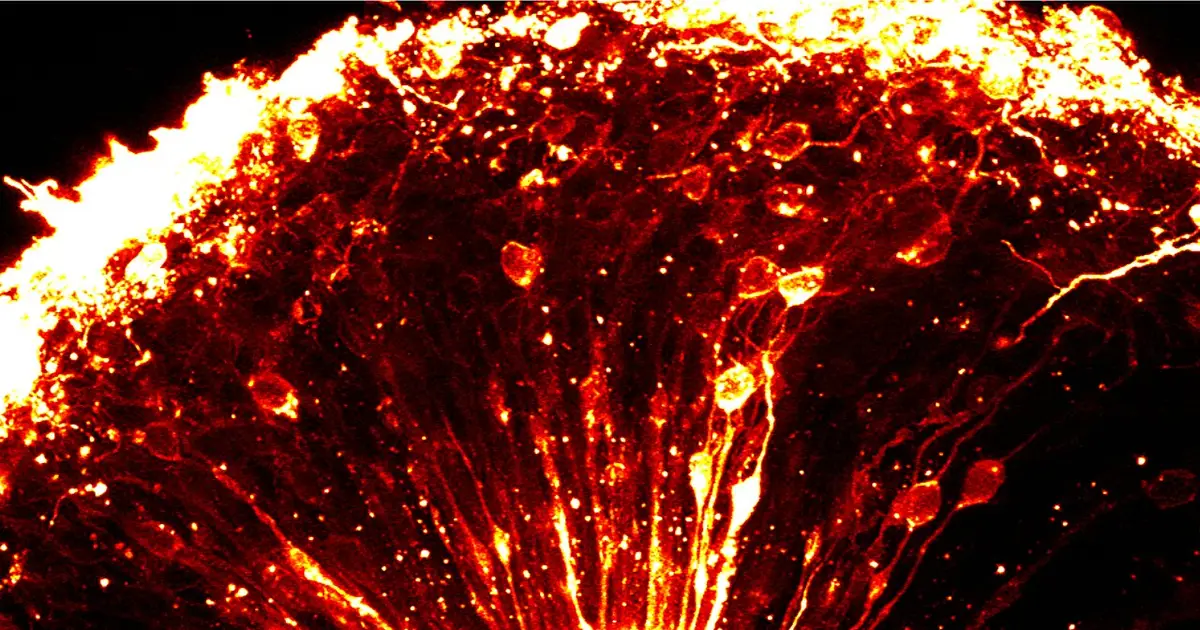
How did the human brain become so much larger than that of our closest evolutionary relatives? Part of the answer lies not in new genes, but in how humans and non-human apes use the genes they share.

AI Summary
Researchers led by Prof. Mareike Albert at TU Dresden used stem‑cell‑derived brain organoids to compare early brain development in humans, chimpanzees and gorillas. They discovered that human organoids exhibit more active genetic switches, boosting expression of genes that promote branching of neural precursor cells. This increased branching is associated with the production of more neurons, offering a mechanistic explanation for the larger human brain relative to great apes. The findings appear in Nature Communications.
AI summaries can be wrong sometimes—always verify important details using the source article.
How AI & Automation are usedMore from Science
Continue reading recent Science coverage
- Urban infrastructure grows more slowly than population, global analysis findsContinue reading
- Antarctic rocks reveal a missing chapter of glacier historyContinue reading
- Scientists discover hidden weaknesses in microtubules stabilized by a cancer drugContinue reading
- Physicists Propose a Strange New State of Matter: A Liquid That Can Flow in TimeContinue reading
Support HappeningNow
Independent AI-powered news analysis is reader-supported. Your contribution helps cover infrastructure, summaries, and continued platform development.
Support HappeningNow