
Science · 3 views
Spatial mapping reveals how human urogenital organs codevelop during organogenesis
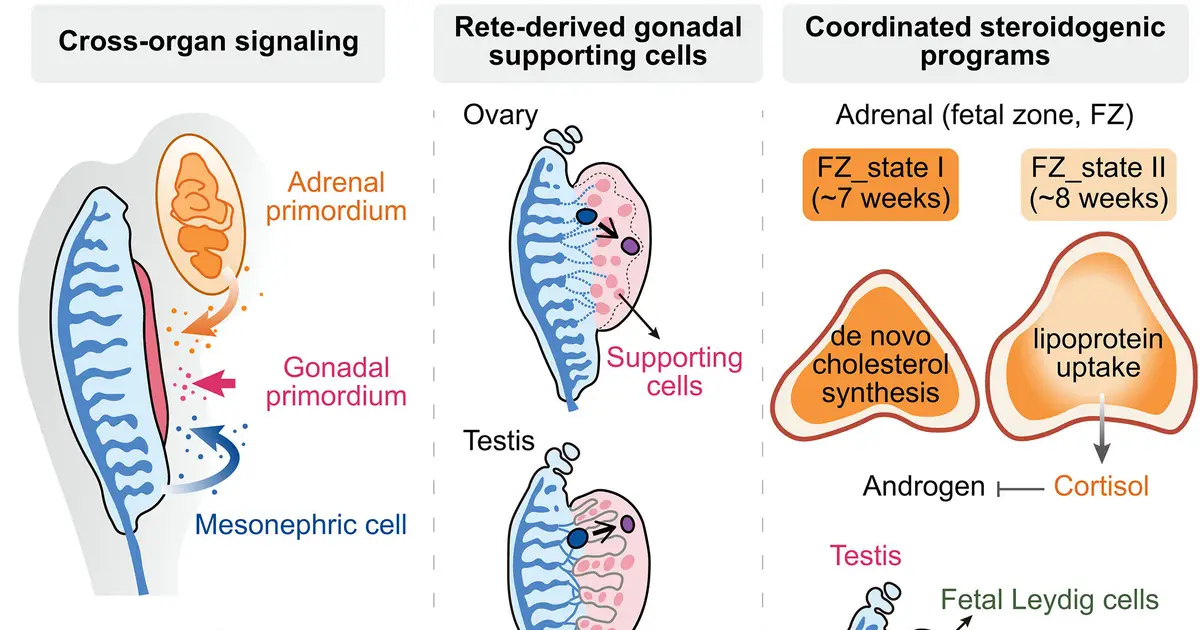
A new study has mapped human urogenital development in its native spatial context, revealing how neighboring organs coordinate their development through cellular communication and molecular signaling during embryogenesis.

AI Summary
A new study has mapped human urogenital development in its native spatial context, showing how neighboring organs coordinate their growth through cellular communication and molecular signaling during embryogenesis. The research was published in Science and led by Guo Jingtao and Wang Xiaoyan at the Institute of Zoology, Chinese Academy of Sciences. Collaborators included scientists from Peking University Third Hospital and the Women and Children’s Hospital at Qingdao University. The findings illuminate the interactive mechanisms that drive organogenesis in the human urogenital system.
AI summaries can be wrong sometimes—always verify important details using the source article.
How AI & Automation are usedMore from Science
Continue reading recent Science coverage
- Scientists Have Built a Robot Dog Powered by Human Brain CellsContinue reading
- Scientists develop new system to boost prime editing in dicot plantsContinue reading
- Figuring out where cosmic neutrinos come from is tricky—radio telescopes could help find 'ghost particles' originContinue reading
- Traditional Chinese Medicine Formula Kills Drug-Resistant Cancer Cells in The LabContinue reading
Support HappeningNow
Independent AI-powered news analysis is reader-supported. Your contribution helps cover infrastructure, summaries, and continued platform development.
Support HappeningNow