
Science · 4 views
Scientists discover dispersal mechanism and new gene family in harmful E. coli strains
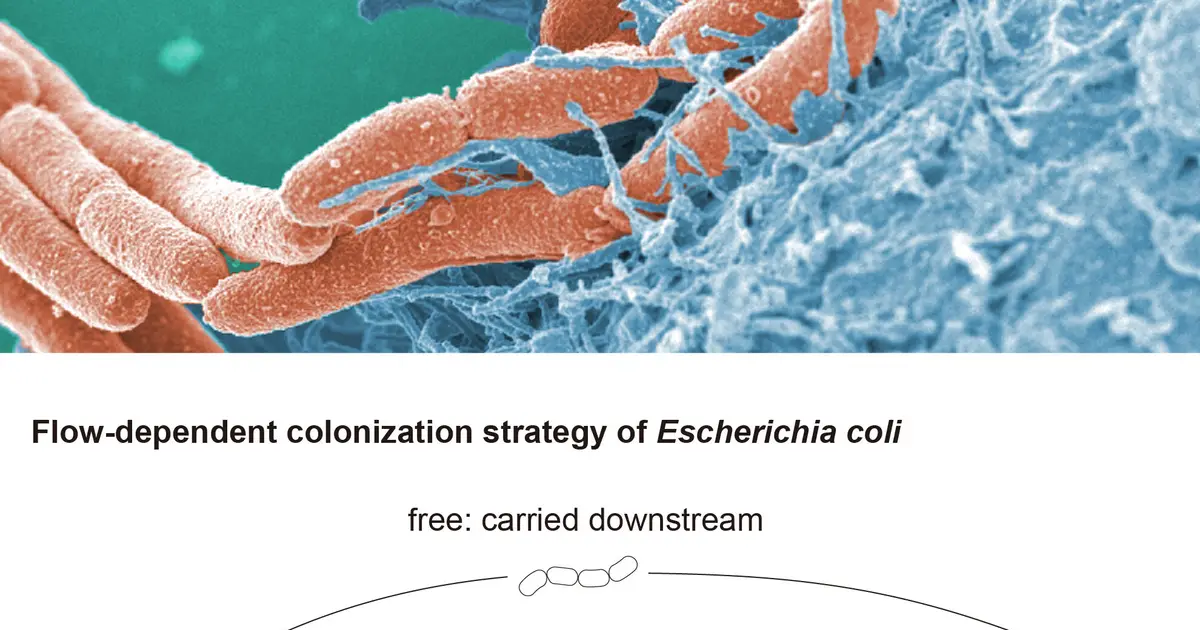
Researchers from Tokyo Metropolitan University have identified how certain dangerous bacteria spread. They studied chain-like adherence pattern (CLAP) varieties of Shiga toxin-producing E.

AI Summary
Researchers from Tokyo Metropolitan University studied chain‑like adherence pattern (CLAP) strains of Shiga toxin‑producing *E. coli* (STEC). They found that a single bacterium first attaches to a surface, elongates, and then divides, forming a continuous chain that never separates. When fluid flow is applied, the ends of these chains can break off. The detached chain ends are capable of attaching to new surfaces, allowing the bacteria to disperse. This mechanism explains how the harmful STEC strains spread.
AI summaries can be wrong sometimes—always verify important details using the source article.
How AI & Automation are usedMore from Science
Continue reading recent Science coverage
- One of the fundamental forces is stronger than we thoughtContinue reading
- Scientists to probe the source behind a massive 1946 tsunamiContinue reading
- Plague was killing entire families thousands of years before the Black DeathContinue reading
- Breakthrough: Scientists Just Teleported an Image Across 100 Quantum Channels at OnceContinue reading
Support HappeningNow
Independent AI-powered news analysis is reader-supported. Your contribution helps cover infrastructure, summaries, and continued platform development.
Support HappeningNow