
Science
Nuclear-spin swap extends room-temperature entanglement lifetime up to 240-fold
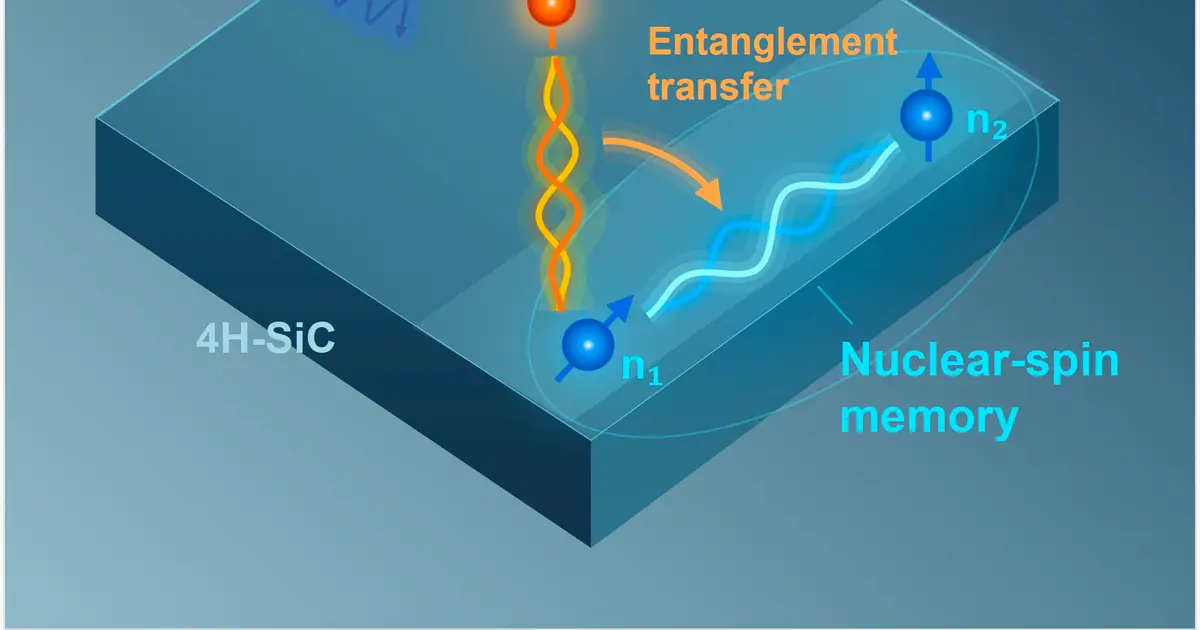
Researchers in China have extended the lifetime of entanglement in a room-temperature, solid-state system by up to a factor of 240.

AI Summary
Researchers at the University of Science and Technology of China in Hefei have increased the duration of entanglement in a room‑temperature solid‑state system by as much as 240 times. Led by Shuo Ren and Rui‑Jian Liang, the team moved entangled states from electron spins in solid‑state defects to the spins of nearby atomic nuclei, which are far less susceptible to environmental noise. The work demonstrates that nuclear spins can serve as more durable carriers of quantum information in ambient conditions. The findings were reported in Physical Review Letters.
AI summaries can be wrong sometimes—always verify important details using the source article.
How AI & Automation are usedMore from Science
Continue reading recent Science coverage
- Drought in the Northeastern United States has decreasedContinue reading
- A mushroom-powered boost for soybean byproductsContinue reading
- Family interactions can help young beetles cope with climate stress, study findsContinue reading
- Swimmer made of quantum light breaks Newton’s third lawContinue reading
Support HappeningNow
Independent AI-powered news analysis is reader-supported. Your contribution helps cover infrastructure, summaries, and continued platform development.
Support HappeningNow