
Health · 38 views
New approach opens rare immune cells to genetic risk research
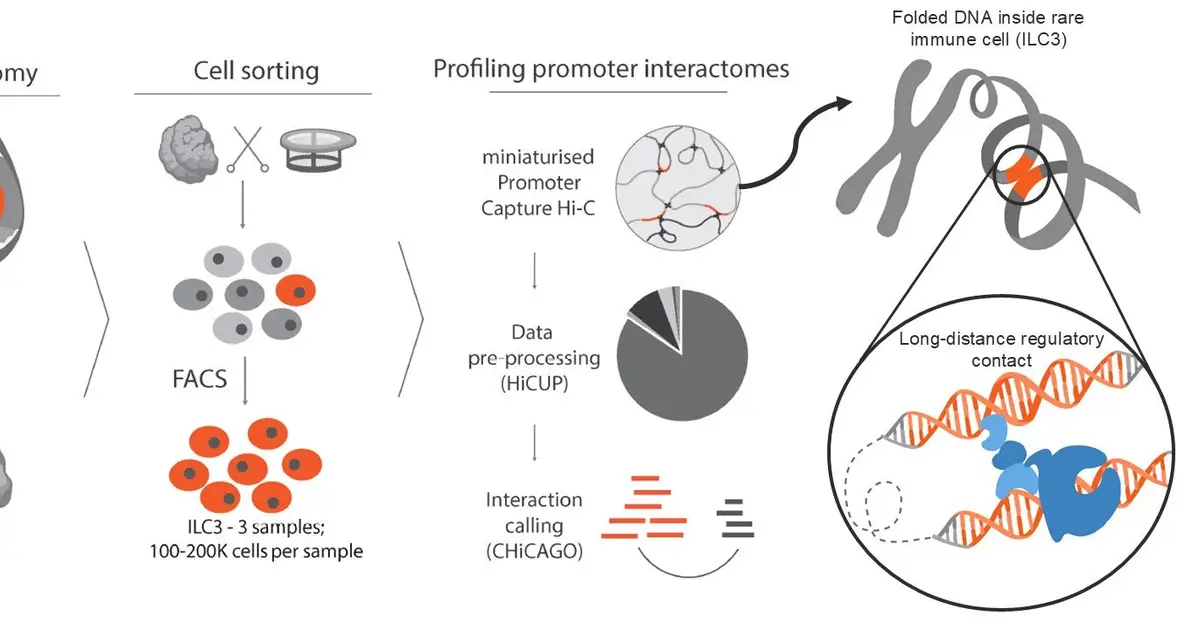
Much of how genetic risk leads to disease has remained hidden. In many cases, genetic variants linked to disease do not act on nearby genes along the chromosome.

AI Summary
Scientists have developed a new method to map long‑range genetic interactions in rare immune cells, a step that could clarify how disease‑associated variants influence distant genes. The approach addresses a key obstacle: many risk variants act on genes far from their chromosomal location because DNA folds to bring distant regions into contact. Prior studies struggled to capture these long‑distance regulatory links in the scarce immune cell types that are critical to disease. By enabling the detection of such connections, the technique promises to better link genetic risk to the underlying genes and mechanisms that drive disease.
AI summaries can be wrong sometimes—always verify important details using the source article.
How AI & Automation are usedMore from Health
Continue reading recent Health coverage
- Once-daily oral icotrokinra outperforms placebo in ulcerative colitisContinue reading
- Reprogramming tumor microenvironment could improve prospects for treatment of pancreatic cancerContinue reading
- Tegoprubart preserves kidney function better than tacrolimus in first-time transplant patients, trial suggestsContinue reading
- Melanoma vaccine reduces death or cancer recurrence by 42%Continue reading
Support HappeningNow
Independent AI-powered news analysis is reader-supported. Your contribution helps cover infrastructure, summaries, and continued platform development.
Support HappeningNow