
Science · 4 views
Marine fossils in Colombia reveal possible evolutionary transition without mass extinction
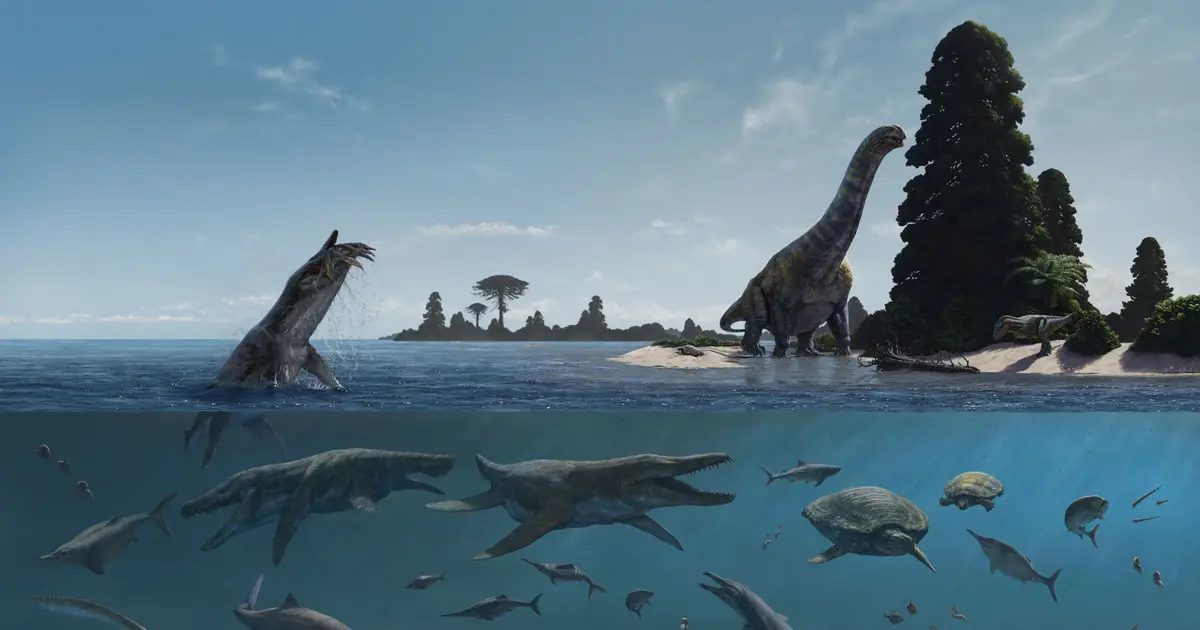
A remarkably diverse fossil ecosystem in central Colombia that preserves an unusual overlap between survivors of older Jurassic groups and newer Cretaceous lineages has led researchers at McGill University and the Centro de…

Summary
A remarkably diverse fossil ecosystem in central Colombia that preserves an unusual overlap between survivors of older Jurassic groups and newer Cretaceous lineages has led researchers at McGill University and the Centro de Investigaciones Paleontológicas (CIP) to recognize a new pattern of large-scale evolutionary transition, one that does not include mass extinctions. Based on their research on the Paja Formation, Ph.D.
AI summaries can be wrong sometimes—always verify important details using the source article.
How AI & Automation are usedMore from Science
Continue reading recent Science coverage
- Breeding advance could help protect East African rice harvests from bacterial blightContinue reading
- Two Different Kinds of Gamma-Ray Bursts Erupted 4 Minutes Apart. Astronomers Have Never Seen This Before.Continue reading
- How did the biggest crypto heist in history just happen?Continue reading
- Resident experience matters in estimating neighborhood walkability, study showsContinue reading
Support HappeningNow
Independent AI-powered news analysis is reader-supported. Your contribution helps cover infrastructure, summaries, and continued platform development.
Support HappeningNow