HAPPENING NOW
Science
Machine learning calibration of biosensors for microcystin toxin monitoring in freshwater
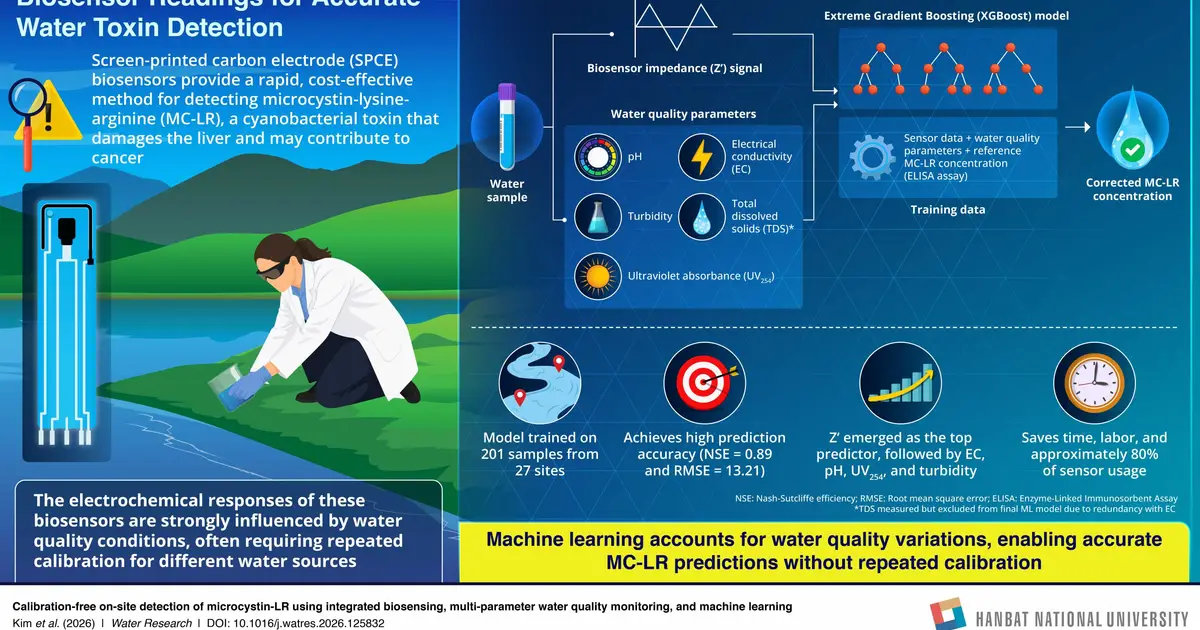
Portable screen-printed carbon electrode (SPCE) biosensors offer a rapid, low-cost way to detect microcystin-lysine-arginine (MC-LR), an…

AI Summary
Portable screen-printed carbon electrode (SPCE) biosensors offer a rapid, low-cost way to detect microcystin-lysine-arginine (MC-LR), an extremely potent toxin produced by cyanobacteria during harmful algal blooms in freshwater. Even at low concentrations, MC-LR can damage the liver and has been linked to an increased risk of liver and colon cancer, and the…
Read full article on PHYSAI summaries can be wrong sometimes—always verify important details using the source article.
Enjoyed this article? Consider supporting HappeningNow to help keep independent AI-powered news analysis moving forward. Your contribution helps cover infrastructure, AI summaries, and continued platform development.
Support HappeningNowMore from Science
Continue reading recent Science coverage
- Jellyfish videos reveal why science content sparks curiosity for some viewersContinue reading
- The public isn't bored with economists, management scholars and sociologists but engaging people has conditionsContinue reading
- How simple changes to PowerPoint presentations can make a big difference for learnersContinue reading