
Science · 3 views
Laser-plasma accelerator could generate bright X-rays for biological imaging, simulations show
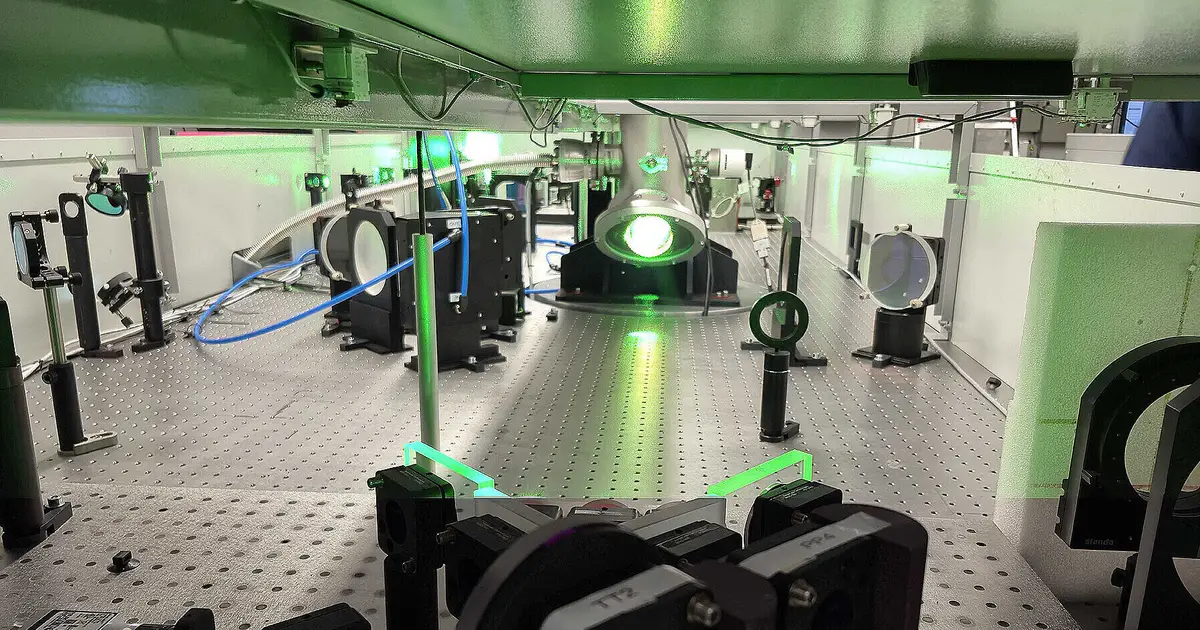
X-rays with wavelengths between approximately 2.3 and 4.4 nanometers, i.e., in the so-called water window, are particularly well suited to examining biological samples in their natural, aqueous environment.

AI Summary
X‑rays with wavelengths of roughly 2.3 to 4.4 nanometers fall within the “water window,” making them especially suitable for imaging biological specimens in their natural aqueous state. Accessing this radiation at sufficient quality and intensity has been challenging because, until now, only free‑electron lasers housed in large‑scale accelerator facilities have been able to produce it.
AI summaries can be wrong sometimes—always verify important details using the source article.
How AI & Automation are usedMore from Science
Continue reading recent Science coverage
- Astronomers deliver the sharpest and deepest view yet of the low-frequency radio skyContinue reading
- France's shorter workweek hit lower-skilled workers harderContinue reading
- World First: Underwater Volcano Off US Coast Generates Net-Positive ElectricityContinue reading
- Leaf nutrient balance helps explain earlier fall color in US forestsContinue reading
Support HappeningNow
Independent AI-powered news analysis is reader-supported. Your contribution helps cover infrastructure, summaries, and continued platform development.
Support HappeningNow