
Science
LA fire smoke triggered surge in airborne toxins: How long did they stay?
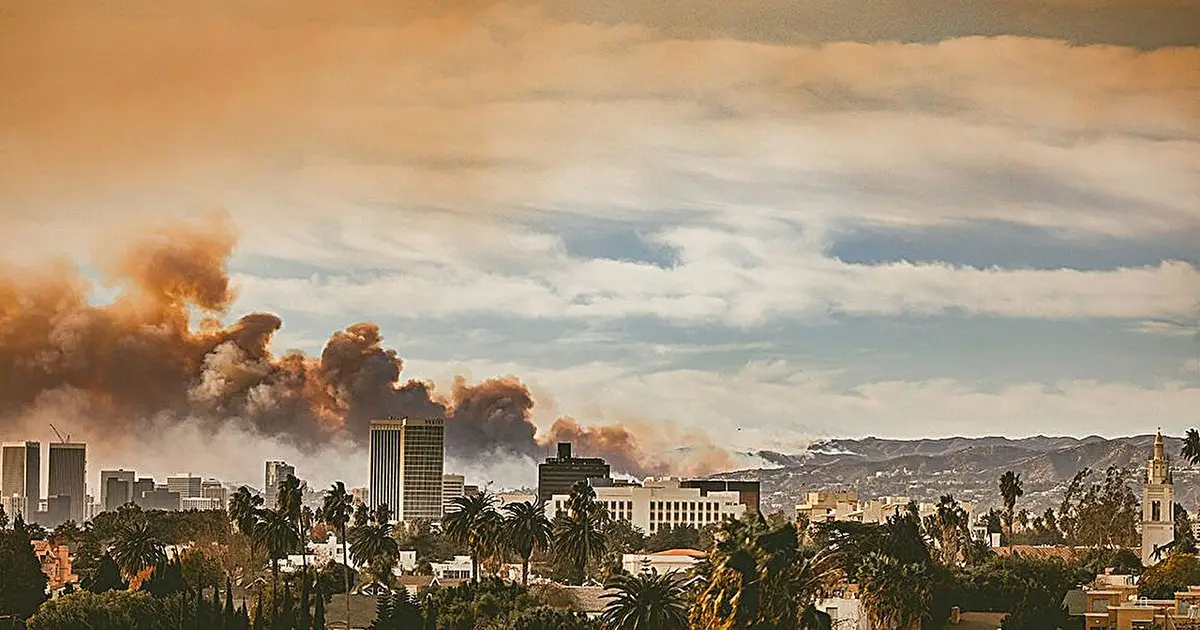
A new study from UCLA provides insights into how the January 2025 Eaton fire affected air quality downwind, showing how levels of toxic airborne contaminants spiked and then dissipated as the burning died down.

AI Summary
A UCLA study examined the impact of the January 2025 Eaton fire on downwind air quality, documenting a sharp rise in toxic airborne contaminants that fell as the fire waned. Published in ACS ES&T Air, the research measured markedly elevated concentrations of lead, arsenic, chlorine, bromine and copper in the smoke while the fire was actively burning. The findings illustrate how the fire’s emissions temporarily spiked these hazardous metals before dissipating as combustion ceased.
AI summaries can be wrong sometimes—always verify important details using the source article.
How AI & Automation are usedMore from Science
Continue reading recent Science coverage
- Changing counterions gives molecular materials new electronic behaviorsContinue reading
- Ningaloo Reef corals reveal early fall spawning window for two key speciesContinue reading
- Higher-dimensional black holes hide an exact symmetry in their ringing, and string-inspired gravity breaks itContinue reading
- New findings explain how cells assemble machinery to repair damaged DNAContinue reading
Support HappeningNow
Independent AI-powered news analysis is reader-supported. Your contribution helps cover infrastructure, summaries, and continued platform development.
Support HappeningNow