
Science · 188 views
JWST peeks at Callisto's ancient scars
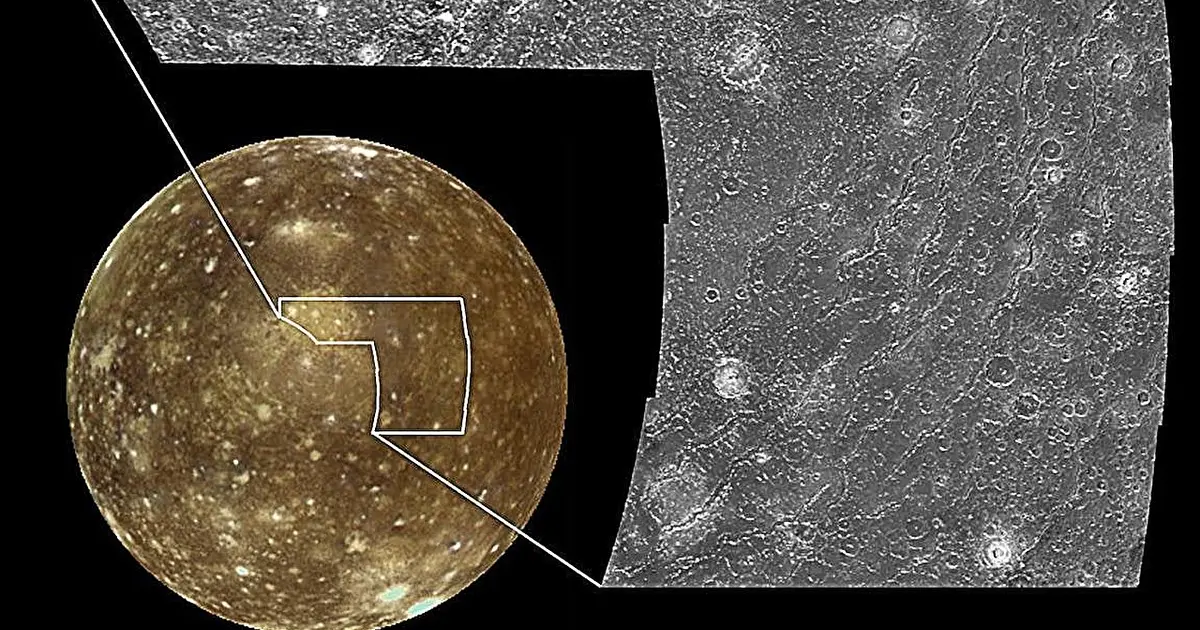
Of Jupiter's four Galilean moons, Callisto is the one that gets the least attention. Io is constantly being resurfaced by volcanoes.

AI Summary
New James Webb Space Telescope observations reveal that Callisto, Jupiter’s least studied Galilean moon, exhibits more activity than previously thought. Using the telescope’s Near‑Infrared Spectrograph, an international team led by Caltech’s Maria Camarca captured spectra of three key regions: the moon’s trailing hemisphere, the large Asgard impact basin, and a view centered on Valhalla, the solar system’s biggest multi‑ring impact structure. The findings, presented in a paper now accepted by the Planetary Science Journal and posted on arXiv, suggest that Callisto’s ancient, crater‑filled surface is not as inert as once believed.
AI summaries can be wrong sometimes—always verify important details using the source article.
How AI & Automation are usedCoverage Context
More from Science
Continue reading recent Science coverage
- Mapping the green transition of Asia-Pacific economiesContinue reading
- GenAI and travel planning: Should AI agents build our itineraries?Continue reading
- The understanding that even bees have feelings is changing our view of consciousnessContinue reading
- Marine molecule may help combat 'brain-eating' amoebaContinue reading
Support HappeningNow
Independent AI-powered news analysis is reader-supported. Your contribution helps cover infrastructure, summaries, and continued platform development.
Support HappeningNow