HAPPENING NOW
Science · 3 views
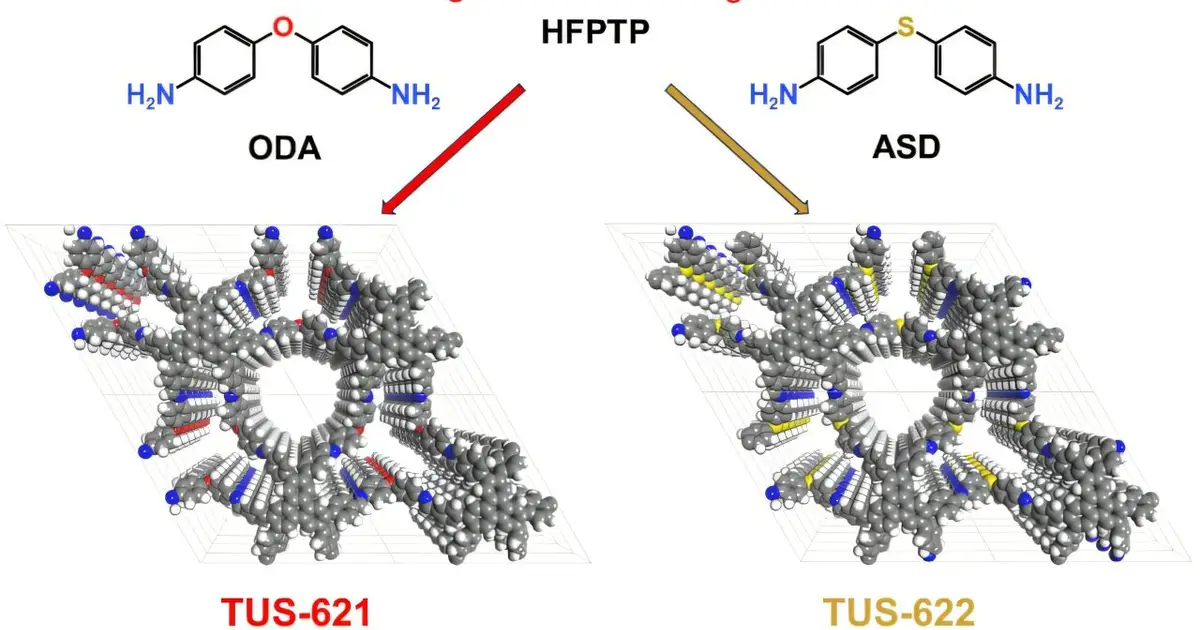
From pore chemistry to carbon capture, new COFs push beyond membrane performance limits
Researchers have made significant strides in developing new materials called COFs, or covalent organic frameworks, which are poised to su…

AI Summary
Researchers have made significant strides in developing new materials called COFs, or covalent organic frameworks, which are poised to surpass the limitations of traditional membrane technology in carbon capture and separation. These innovative materials have the potential to address the long-standing trade-off between permeability and selectivity, allowing for faster and more efficient separation of CO2 from other gases. By leveraging advances in pore chemistry, scientists have engineered COFs with tailored properties that can balance the need for high permeability with the requirement for precise selectivity. The implications of this breakthrough are far-reaching, with potential applications in a range of industries, from natural gas purification to hydrogen production and carbon management. As the world continues to grapple with the challenges of climate change, the development of more effective carbon capture technologies is critical to mitigating the impact of greenhouse gas emissions.
Read full article on PHYSAI summaries can be wrong sometimes—always verify important details using the source article.
Enjoyed this article? Consider supporting HappeningNow to help keep independent AI-powered news analysis moving forward. Your contribution helps cover infrastructure, AI summaries, and continued platform development.
Support HappeningNow