
Science · 2 views
Flexible protein gate controls access to mitochondrial folds, simulations suggest
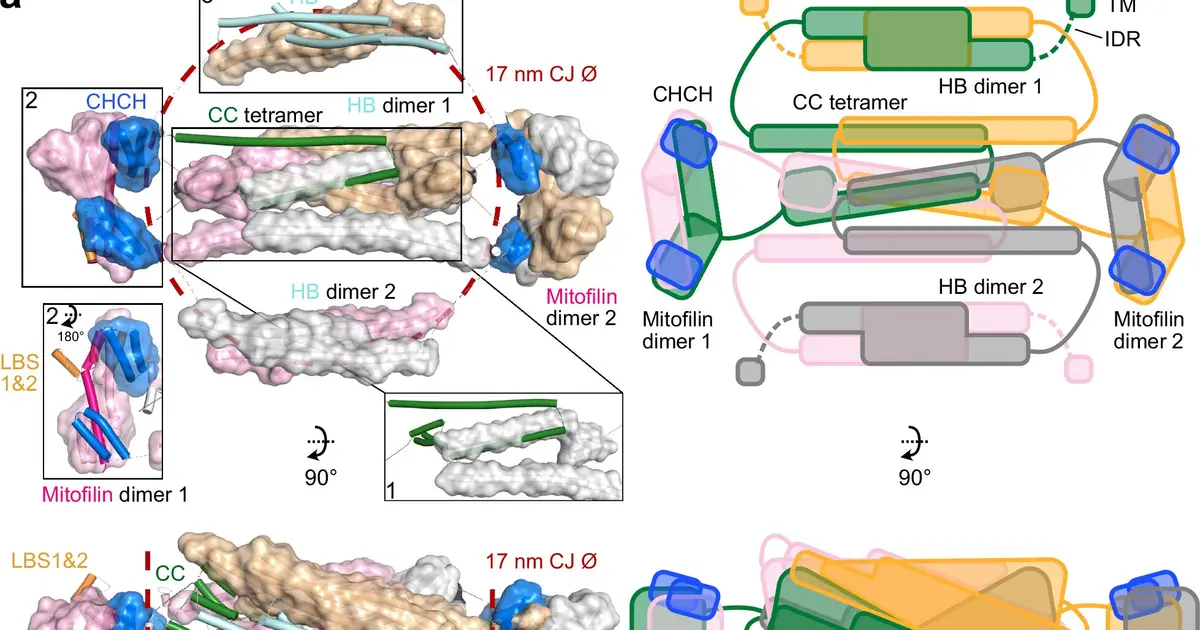
Twenty-four hours a day, seven days a week, mitochondria in our cells churn out energy from the food we eat, which keeps our bodies functioning. Much of this work happens along cristae—deep pockets in the mitochondria's inner membrane.

AI Summary
Scientists model how the MICOS protein complex regulates the shape of mitochondrial cristae and controls molecular traffic through their narrow openings. The simulations show that MICOS acts as a flexible gate, stabilizing the deep pockets of the inner membrane while filtering which molecules can enter or leave. Disruption of this architecture can lead to neurodegenerative diseases and cancer, underscoring the complex’s importance for cellular energy production. The study clarifies the mechanism by which MICOS maintains cristae integrity and suggests that targeting this gate could be a therapeutic strategy.
AI summaries can be wrong sometimes—always verify important details using the source article.
How AI & Automation are usedMore from Science
Continue reading recent Science coverage
- AI techniques behind image creation improve flash flood forecasts across U.S. river basinsContinue reading
- X-ray technique reveals how quantum materials respond to laser pulses in real timeContinue reading
- Hydra loses its immortality after cold triggers switch to sexual reproductionContinue reading
- Richer people have an edge when it comes to getting national park permitsContinue reading
Support HappeningNow
Independent AI-powered news analysis is reader-supported. Your contribution helps cover infrastructure, summaries, and continued platform development.
Support HappeningNow