
Science · 9 views
Electrical guardrails for charge carriers: A new approach to harness graphene for solar cells
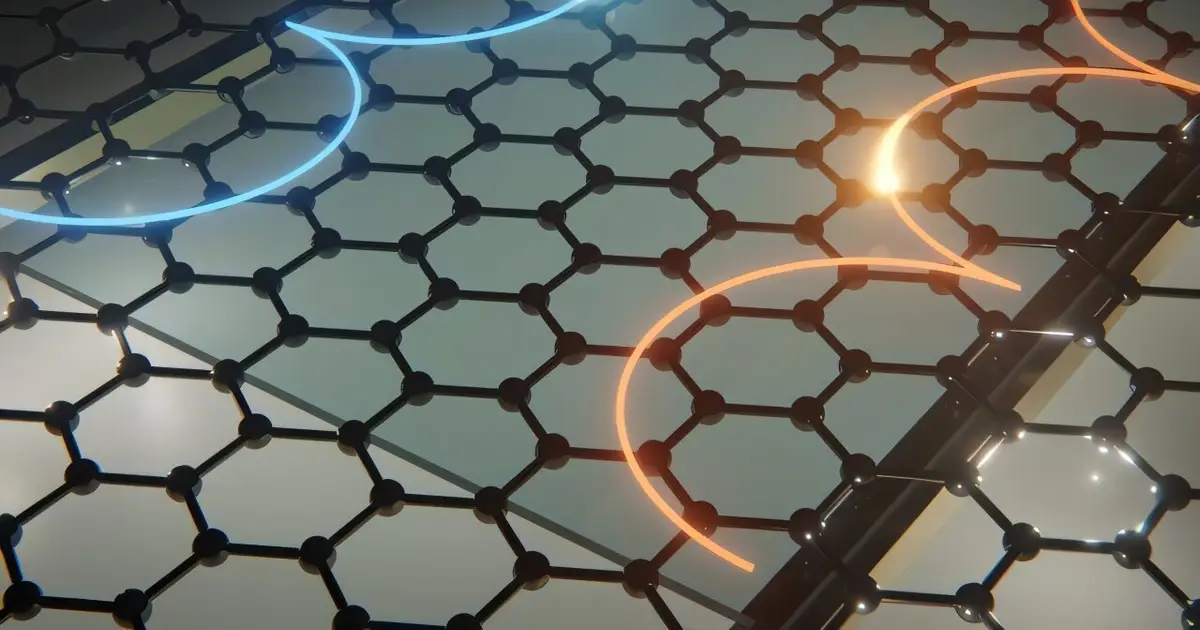
Graphene is a single layer of carbon atoms in which electrons can move with high mobility, making it promising for high-speed electronic components. Yet it is not very efficient at converting light into electricity.

AI Summary
Researchers note that graphene’s single‑atom thickness gives electrons exceptionally high mobility, making it attractive for fast electronic components, but its lack of a bandgap hampers efficient light‑to‑electricity conversion. When graphene absorbs light, electrons are excited while positively charged “holes” remain, yet without a mechanism to separate and route these carriers to distinct contacts the energy cannot be harvested. Conventional solar cells rely on semiconductor bandgaps, such as silicon’s, to achieve this separation, a capability graphene inherently lacks.
AI summaries can be wrong sometimes—always verify important details using the source article.
How AI & Automation are usedMore from Science
Continue reading recent Science coverage
- Cold Triggers a Hidden Molecular Pathway That Extends Lifespan, Study FindsContinue reading
- NASA's new UV space telescope will launch in 2031Continue reading
- Keeping one eye open: Veterinarian applies unique treatment to preserve dog's eyesightContinue reading
- Chemical recycling turns silicone waste into reusable building blocks with up to 99% yieldContinue reading
Support HappeningNow
Independent AI-powered news analysis is reader-supported. Your contribution helps cover infrastructure, summaries, and continued platform development.
Support HappeningNow