
Science · 5 views
Deep-sea mussels trade tidal rhythms for a 24-hour cycle in the lab
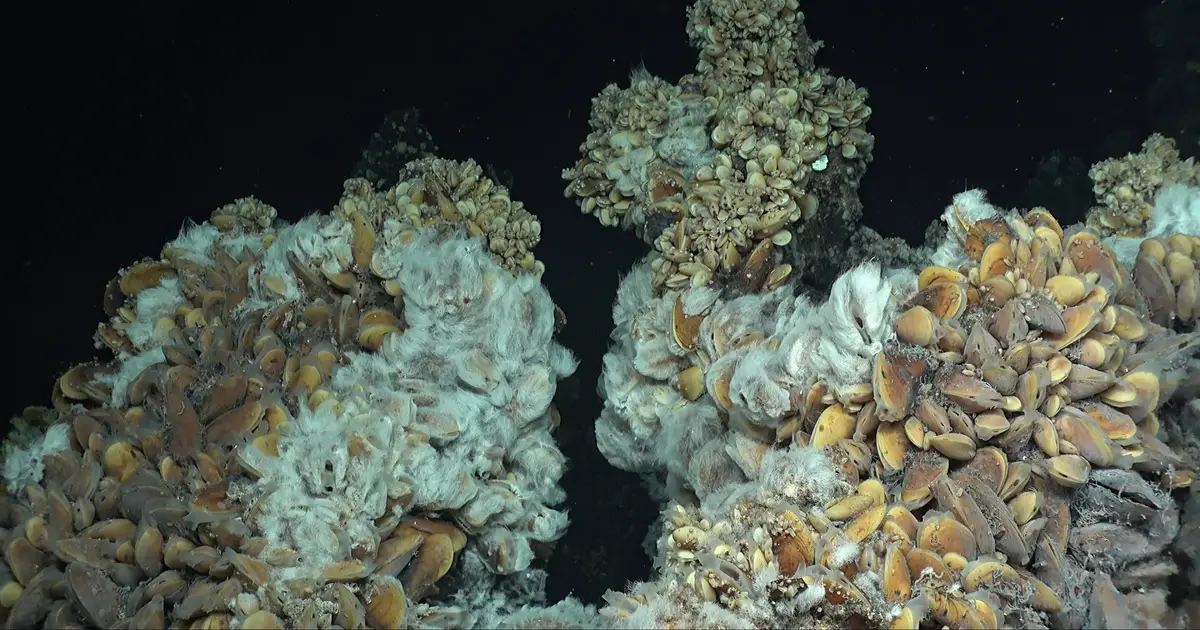
Hydrothermal vents lie in perpetual darkness in the depths of the ocean, yet the cells of the vent mussel Bathymodiolus azoricus, which lives 1,700 meters (5,600 feet) below the surface, follow a 24-hour rhythm in the laboratory.

AI Summary
Researchers from the University of Vienna, IFREMER (France), the University of Oldenburg, and AWI (Germany) established cell cultures from the deep‑sea mussel Bathymodiolus azoricus, which lives 1,700 m below the surface. In laboratory conditions the mussel cells exhibit a 24‑hour rhythm, despite the vents’ perpetual darkness. The study, published in EMBO Reports, shows that the mussels’ biological timing relies on the same genes that regulate the 24‑hour clock in land‑dwelling organisms. This finding provides cellular and molecular insight into deep‑sea biological timing mechanisms.
AI summaries can be wrong sometimes—always verify important details using the source article.
How AI & Automation are usedMore from Science
Continue reading recent Science coverage
- How competing reproductive needs shaped the evolution of liverwortsContinue reading
- Why large dogs age faster than small ones, and other October research highlightsContinue reading
- Exactly solvable model reveals how trapped light can create magnetic order in one-dimensional spin chainsContinue reading
- Are we overfertilizing our fields? Researchers challenge conventional soil testingContinue reading
Support HappeningNow
Independent AI-powered news analysis is reader-supported. Your contribution helps cover infrastructure, summaries, and continued platform development.
Support HappeningNow