
Science · 2 views
Continuous video of black hole radio observations challenges shock wave theory
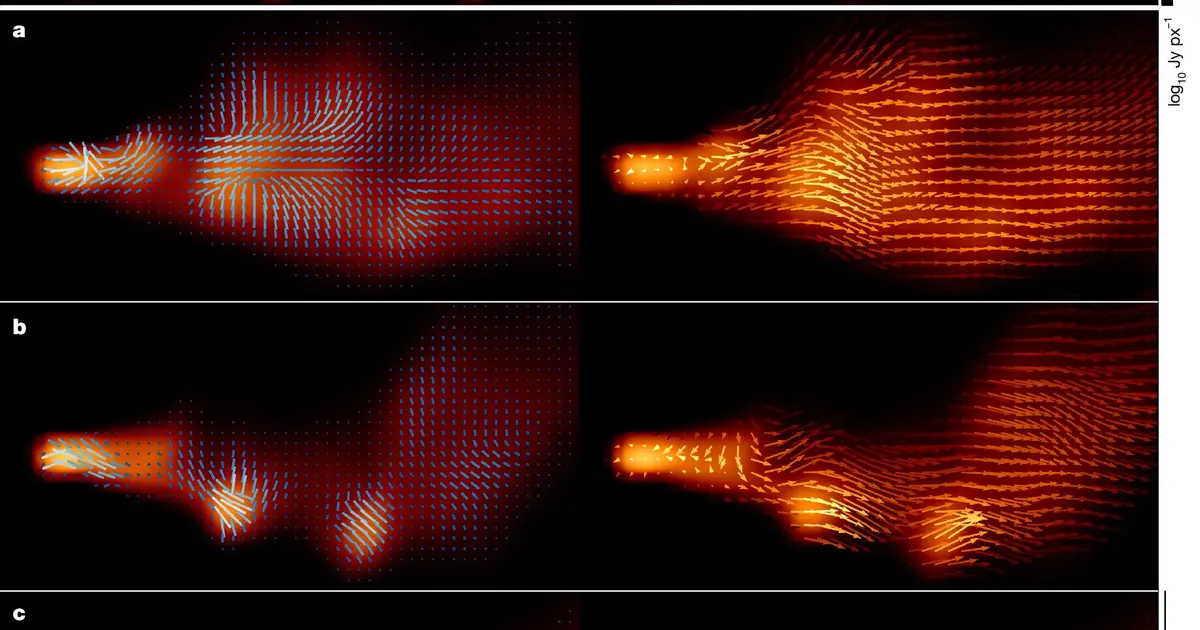
For years, scientists have relied primarily on radio imaging from techniques like very long baseline interferometry (VLBI) to study jets from the active galactic nuclei of supermassive black holes.

Summary
For years, scientists have relied primarily on radio imaging from techniques like very long baseline interferometry (VLBI) to study jets from the active galactic nuclei of supermassive black holes. This allows for the detection of broad, unresolved features, called components, moving at what appear to be faster-than-light speeds. However, traditional imaging has poor resolution and treats each observation as a separate snapshot in time, limiting information about how the features move.
AI summaries can be wrong sometimes—always verify important details using the source article.
How AI & Automation are usedMore from Science
Continue reading recent Science coverage
- Fear-based education around porn is failing young people, study suggestsContinue reading
- Rewetting peatlands may curb warming-driven CO₂ emissionsContinue reading
- We may finally know what kick-starts muscle contractions in childbirthContinue reading
- 'White graphene' reshaped at the atomic scale with tailor-made nanoporesContinue reading
Support HappeningNow
Independent AI-powered news analysis is reader-supported. Your contribution helps cover infrastructure, summaries, and continued platform development.
Support HappeningNow