
Health
Childhood cancer survivors' cells repair low-dose radiation damage more efficiently, study finds
A study of how cells repair radiation-induced genetic damage offers clues to why some people develop cancer early in life or more than once.

AI Summary
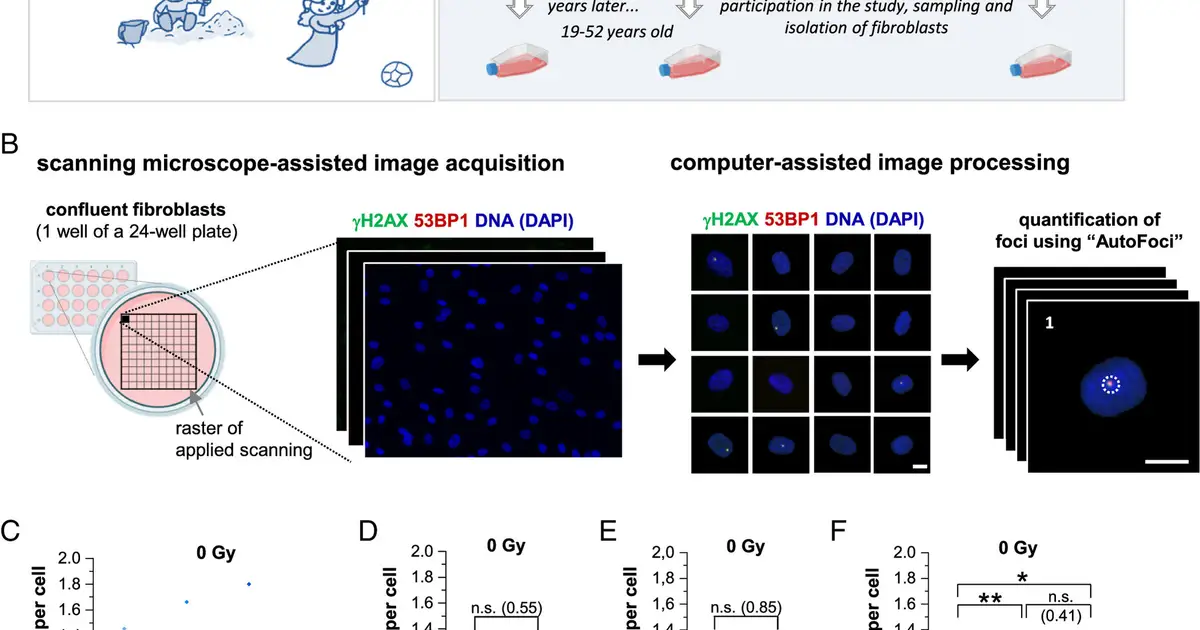
A study published in the Proceedings of the National Academy of Sciences examined how cells repair genetic damage caused by low‑dose radiation. The research focused on cells from childhood cancer survivors, comparing their repair efficiency to that of non‑survivors. Findings suggest that more efficient DNA repair in these survivors may explain why some individuals develop cancer early in life or experience multiple cancers. The work was part of the ISIBELa collaborative project, which investigates intrinsic radiosensitivity and its long‑term biological and epidemiological effects.
AI summaries can be wrong sometimes—always verify important details using the source article.
How AI & Automation are usedMore from Health
Continue reading recent Health coverage
- New polymer could enable gastrointestinal transit monitoring without ionizing radiationContinue reading
- Landmark trial evaluates chemotherapy benefit in high-risk early-stage breast cancerContinue reading
- President Trump's FDA commissioner nom, Dr. Heidi Overton, faces Senators' questionsContinue reading
- COVID-19 pandemic drove violence and moral suffering for nurses in Latin AmericaContinue reading
Support HappeningNow
Independent AI-powered news analysis is reader-supported. Your contribution helps cover infrastructure, summaries, and continued platform development.
Support HappeningNow