
Science · 40 views
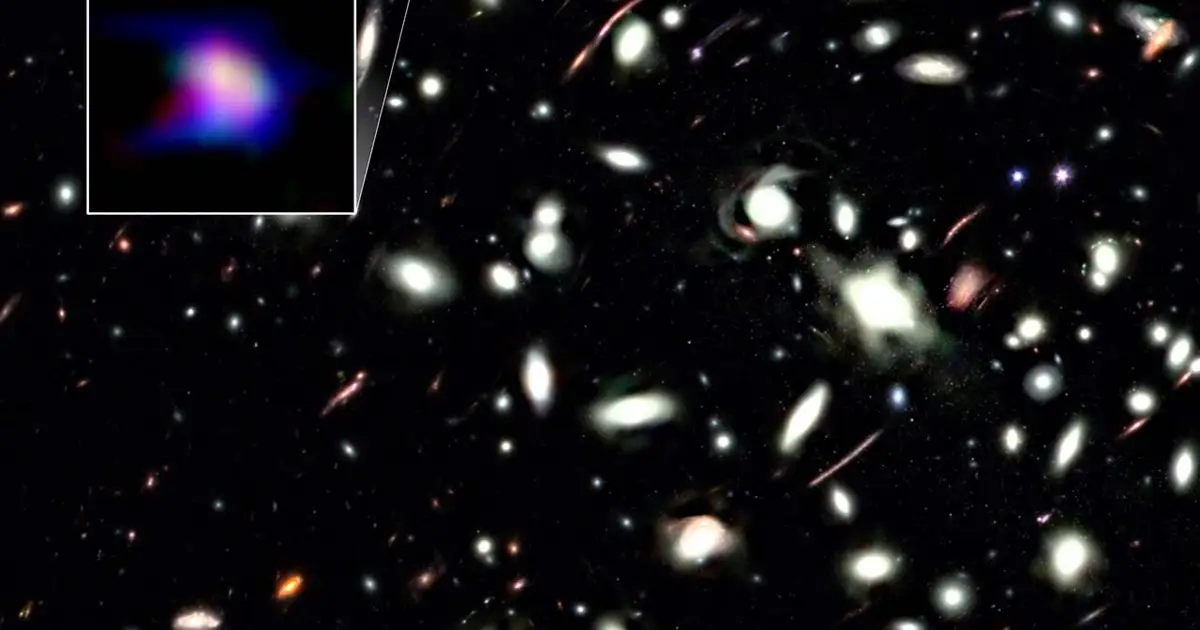
Chemically primitive galaxy from 13 billion years ago reveals record-low oxygen
Science 
Story intelligence
Coverage Single outlet Single-outlet story
Views 40 Community interest
Brief read Under 1 min brief 36 words
Summary
An international team of astronomers has used the James Webb Space Telescope (JWST) and a natural phenomenon known as gravitational lensing to achieve a definitive characterization of LAP1-B, an ultra-faint galaxy from 13 billion years ago.
AI summaries can be wrong sometimes—always verify important details using the source article.
How AI & Automation are usedMore from Science
Continue reading recent Science coverage
- Mapping the green transition of Asia-Pacific economiesContinue reading
- GenAI and travel planning: Should AI agents build our itineraries?Continue reading
- The understanding that even bees have feelings is changing our view of consciousnessContinue reading
- Marine molecule may help combat 'brain-eating' amoebaContinue reading
Support HappeningNow
Independent AI-powered news analysis is reader-supported. Your contribution helps cover infrastructure, summaries, and continued platform development.
Support HappeningNow