
Science · 1 view
Ancient sea levels reveal when the Earth's poles went wandering
Earth's poles do not always stay in the same place. For example, a region once near the North Pole can end up near the equator, and an area near the equator can shift up toward the pole.

Summary
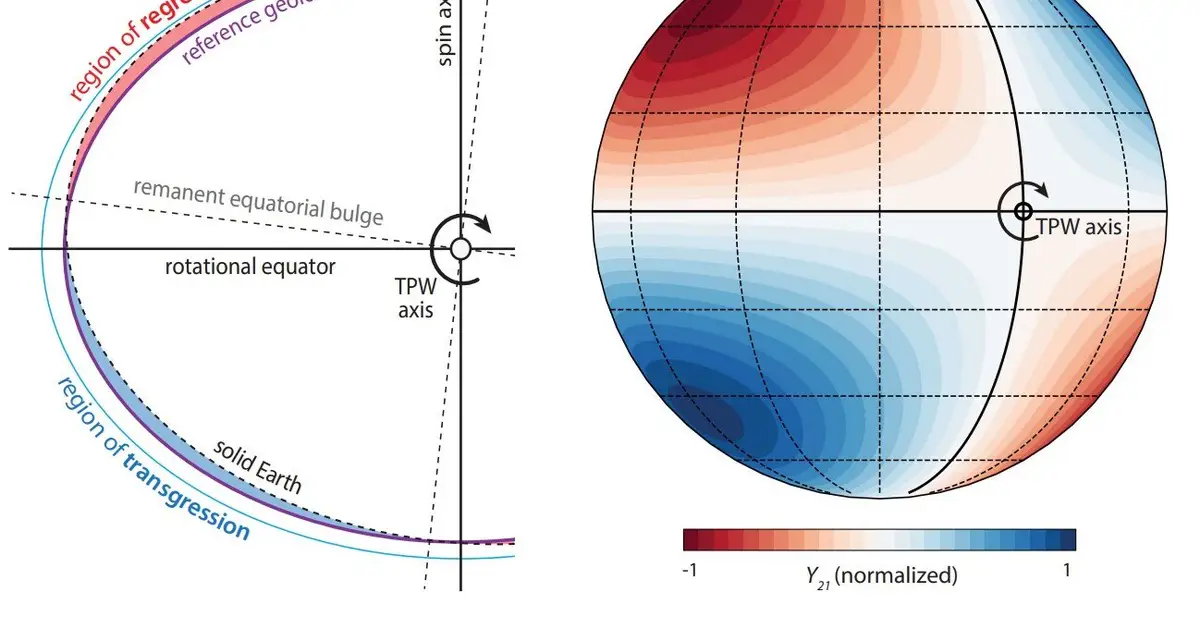
Earth's poles do not always stay in the same place. For example, a region once near the North Pole can end up near the equator, and an area near the equator can shift up toward the pole. This is known as true polar wander (TPW), and it's when Earth's crust and mantle shift together relative to its spin axis. Some scientists believe it is negligible or persistently slow.
AI summaries can be wrong sometimes—always verify important details using the source article.
How AI & Automation are usedMore from Science
Continue reading recent Science coverage
- Animals may have evolved vastly earlier than fossil evidence suggestsContinue reading
- White nationalism's appeal runs deeper than partisan politicsContinue reading
- What space travel teaches us about sleep and circadian rhythmsContinue reading
- Fossil mammal with reptile-like teeth changes picture of our evolutionContinue reading
Support HappeningNow
Independent AI-powered news analysis is reader-supported. Your contribution helps cover infrastructure, summaries, and continued platform development.
Support HappeningNow