
Science · 133 views
Water into fuel: The new nanomaterial that could upgrade green hydrogen
Generating hydrogen without releasing carbon dioxide sounds simple: pass electricity through water, split water molecules and generate green hydrogen. The hard part is the electrocatalyst.

AI Summary
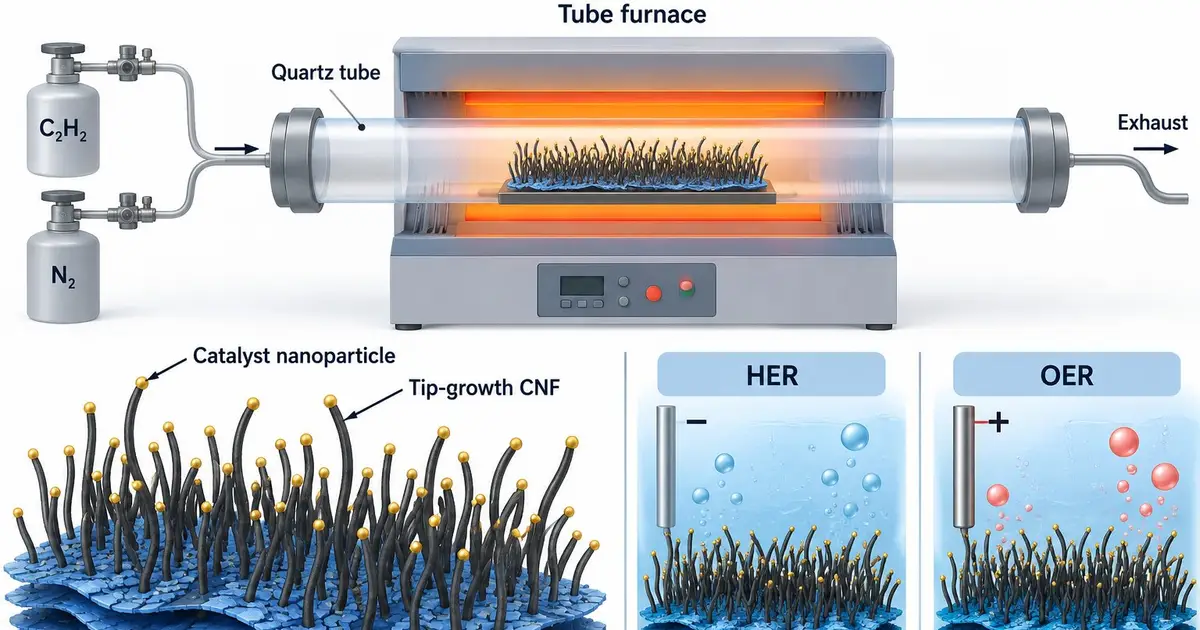
Researchers tested a new electrocatalyst made from small amounts of iron and nickel oxides anchored on carbon nanofibers grown by chemical vapor deposition. The catalyst was designed to replace scarce and expensive platinum, ruthenium, and iridium used in current green hydrogen production. The study, published in ACS Applied Nano Materials, shows the iron‑nickel nanomaterial can drive both the oxygen evolution reaction at the anode and the hydrogen evolution reaction at the cathode. This could enable more affordable, scalable water‑splitting for green hydrogen, which currently supplies only a small fraction of the 96 % of hydrogen produced from fossil fuels.
AI summaries can be wrong sometimes—always verify important details using the source article.
How AI & Automation are usedMore from Science
Continue reading recent Science coverage
- Mapping the green transition of Asia-Pacific economiesContinue reading
- GenAI and travel planning: Should AI agents build our itineraries?Continue reading
- The understanding that even bees have feelings is changing our view of consciousnessContinue reading
- Marine molecule may help combat 'brain-eating' amoebaContinue reading
Support HappeningNow
Independent AI-powered news analysis is reader-supported. Your contribution helps cover infrastructure, summaries, and continued platform development.
Support HappeningNow