
Science · 29 views
DNA origami nanosyringe actively transports molecules into synthetic cells
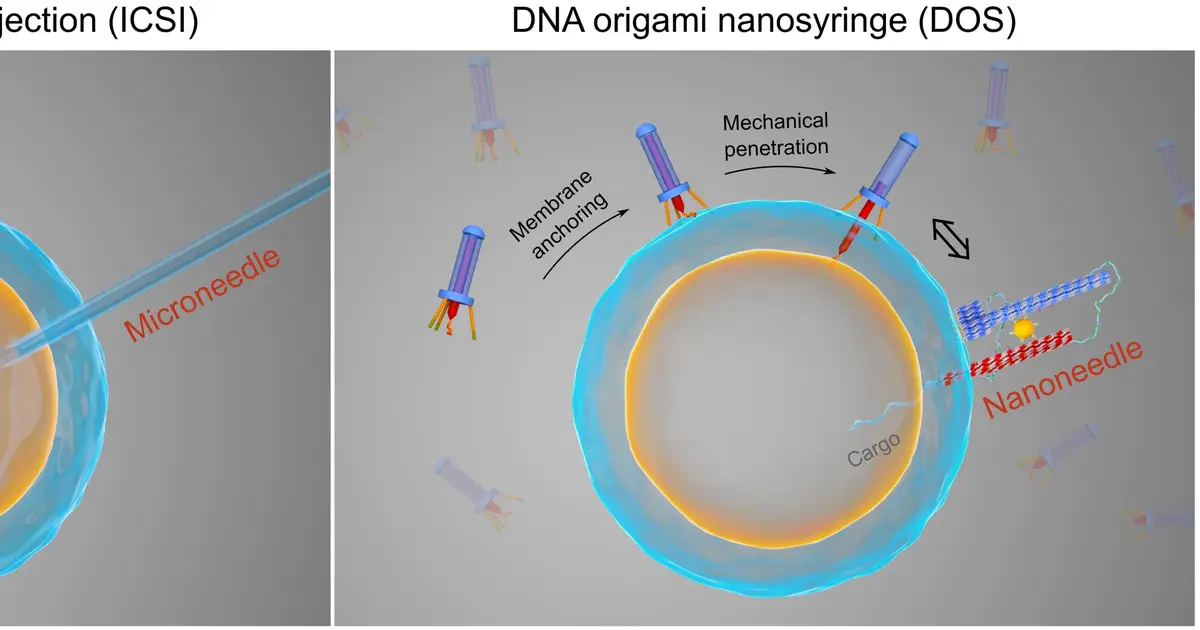
Transporting molecules across biological membranes is essential for life. In nature, this can occur through passive transport, known as diffusion.

AI Summary
Researchers have developed a DNA origami nanosyringe capable of actively transporting molecules into synthetic cells. This device utilizes mechanical motion to facilitate the transfer of molecules, a process that cannot be achieved through passive diffusion alone. The development of this nanosyringe has significant implications for the study of cellular biology and the potential for synthetic cells to mimic natural biological processes. By actively transporting molecules, the nanosyringe can help scientists better understand how cells function and interact with their environment. The use of DNA origami technology in this device allows for precise control over the structure and function of the nanosyringe, enabling researchers to study cellular processes in a highly controlled and reproducible manner.
AI summaries can be wrong sometimes—always verify important details using the source article.
How AI & Automation are usedMore from Science
Continue reading recent Science coverage
- Chemically modified sugars enable direct nanostructure formationContinue reading
- Elections are more predictable than they lookContinue reading
- Inside the Pentagon, the pressure is on to find a home for a new spaceportContinue reading
- Tiny Genetic Tweak From An Ancient Virus Might've Prevented Chimpanzees From Developing Brains Like OursContinue reading
Support HappeningNow
Independent AI-powered news analysis is reader-supported. Your contribution helps cover infrastructure, summaries, and continued platform development.
Support HappeningNow