
Science · 15 views
Untangling the patterns of the cosmic microwave background to better understand the early universe
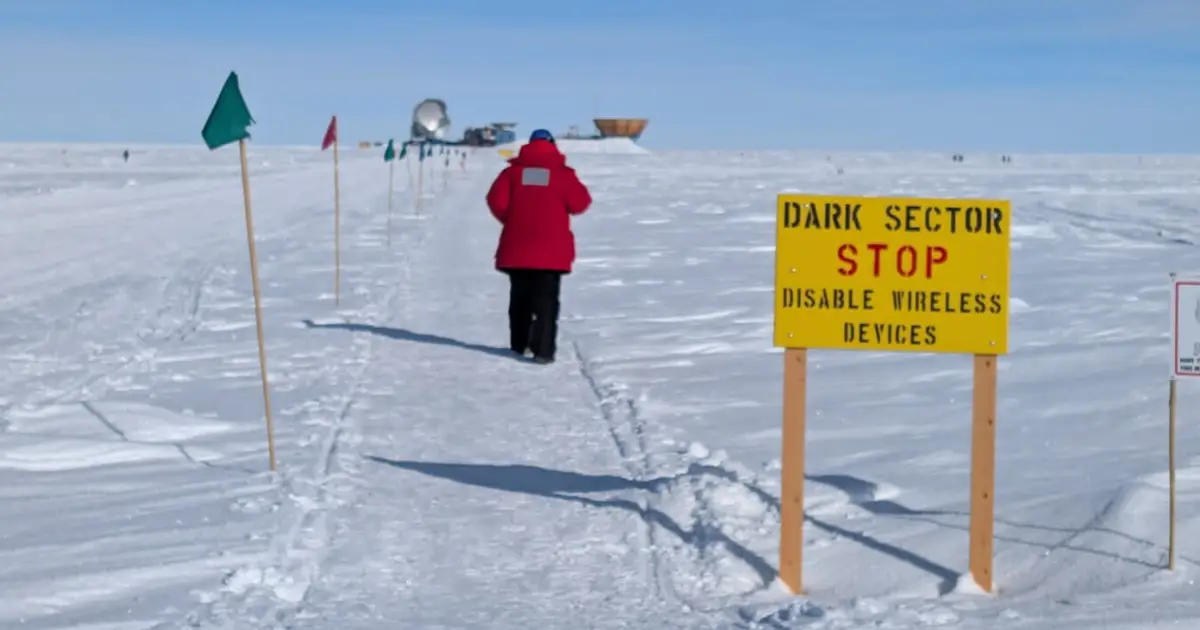
A figure in red trudges across a blanket of white. Snow squeaks under the scientist's feet, too dry to be slick or soft.

AI Summary
Scientists at the U.S. National Science Foundation Amundsen‑Scott South Pole Station use the South Pole Telescope and BICEP experiments to study the cosmic microwave background, the faint heat left from the universe’s earliest moments. The telescopes are located in Antarctica, where the landscape is dominated by ice, snow, a line of flags, and a few large buildings. By observing this background radiation, researchers aim to untangle its patterns and gain insight into the universe’s early evolution.
AI summaries can be wrong sometimes—always verify important details using the source article.
How AI & Automation are usedMore from Science
Continue reading recent Science coverage
- University Exams Produce a Distinct Chemical Signature in Sewage, Study SuggestsContinue reading
- Spot a baby bird on the ground? Don't be tempted to bird‑nap itContinue reading
- The wasps that horrified Darwin reveal evolution's one-way streetsContinue reading
- Air holes turn silicon wafers into flat ultraviolet focusing mirrors for compact opticsContinue reading
Support HappeningNow
Independent AI-powered news analysis is reader-supported. Your contribution helps cover infrastructure, summaries, and continued platform development.
Support HappeningNow