
Science · 38 views
Three energy-loss routes may explain Tarantula Nebula's X-ray shortfall
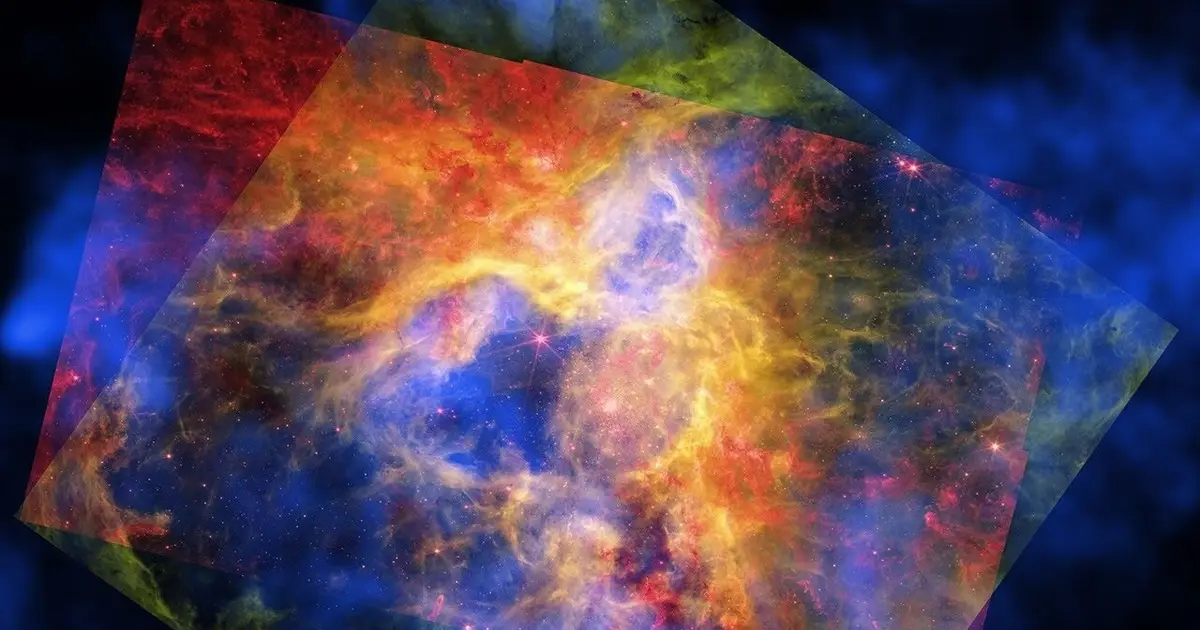
Like a collage made of layered sheets of colored cellophane, a vibrant new image layers observations of a famous star-forming nebula from NASA's space telescopes.

AI Summary
The Tarantula Nebula's X-ray emission is lower than expected, and researchers have identified three possible explanations for this discrepancy. These energy-loss routes suggest that the nebula's X-rays may be absorbed or scattered by surrounding gas and dust, or that the X-rays are being emitted at a different energy level than previously thought. Alternatively, the X-rays could be being blocked by dense regions within the nebula itself. The findings provide new insights into the complex processes occurring within the Tarantula Nebula, a star-forming region that is a key area of study for astronomers.
AI summaries can be wrong sometimes—always verify important details using the source article.
How AI & Automation are usedMore from Science
Continue reading recent Science coverage
- Glowing plants reveal immune responses around infection sites via two colorsContinue reading
- Study maps the human side of flood riskContinue reading
- Your Brain May Be Switching Between Two Versions of Reality 15 Times a SecondContinue reading
- Counting magnetic flux quanta offers new way to measure photon numbersContinue reading
Support HappeningNow
Independent AI-powered news analysis is reader-supported. Your contribution helps cover infrastructure, summaries, and continued platform development.
Support HappeningNow