
Science · 93 views
Surprising ingredients suggest ancient Egyptian paint was far more complex than previously assumed
Ancient Egypt has left us a wealth of artistic treasures, including wall paintings, wooden coffins and limestone reliefs.

AI Summary
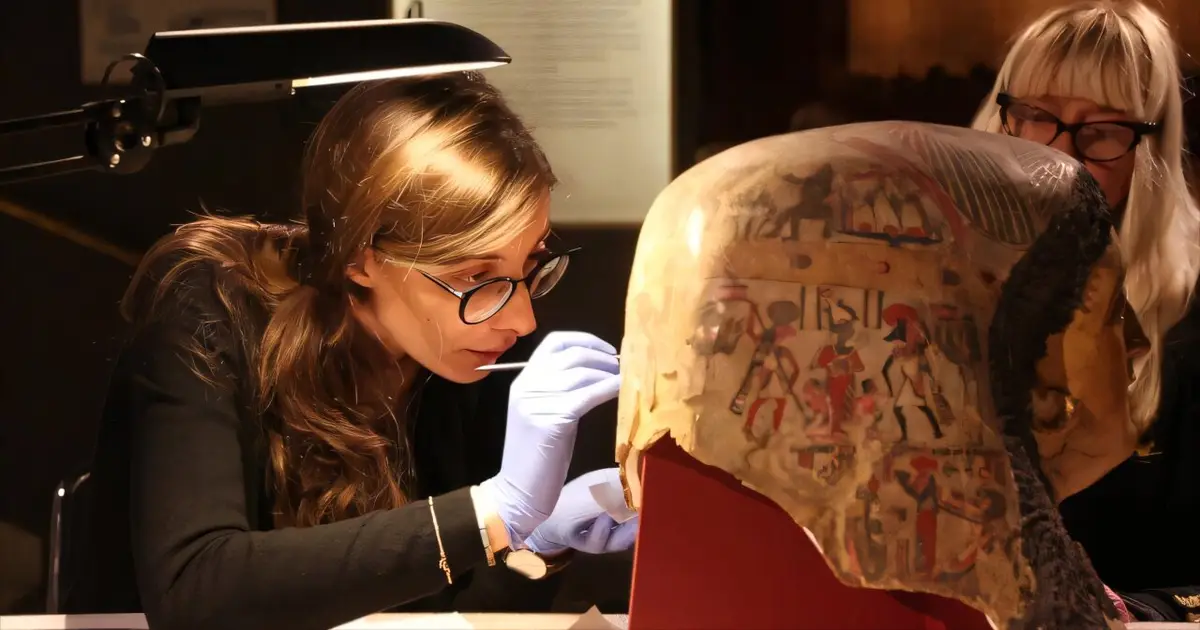
A study in Science Advances examined the organic components of ancient Egyptian paints by analyzing 28 micro‑samples from 14 painted objects—coffins, tomb walls, limestone reliefs and mummy plasterwork—dating from roughly 1425 BCE to 400 CE. Researchers identified a range of binders and adhesives, revealing that the paint mixtures were more chemically complex than previously thought. The work involved an international team of archaeologists, conservators and historians and used proteomics to detect the ingredients. Samples came from three European museum collections, including a painted mummy mask from Stockholm. The findings suggest that ancient Egyptian artisans employed diverse organic materials in their coloration processes.
AI summaries can be wrong sometimes—always verify important details using the source article.
How AI & Automation are usedMore from Science
Continue reading recent Science coverage
- Cleaner brick kilns cut pollution, but gains did not reach workers, research findsContinue reading
- A 1,000-mile cloud on Mars may reveal physics never seen in natureContinue reading
- Ice sheet expansion may have started 2,000 years ago, but we canceled thatContinue reading
- Swinging virtual lightsabers and punching improve pattern-based learning in VR testsContinue reading
Support HappeningNow
Independent AI-powered news analysis is reader-supported. Your contribution helps cover infrastructure, summaries, and continued platform development.
Support HappeningNow