
Science · 1 view
'Self-blinking dyes' simplify nanoscale imaging without sacrificing precision
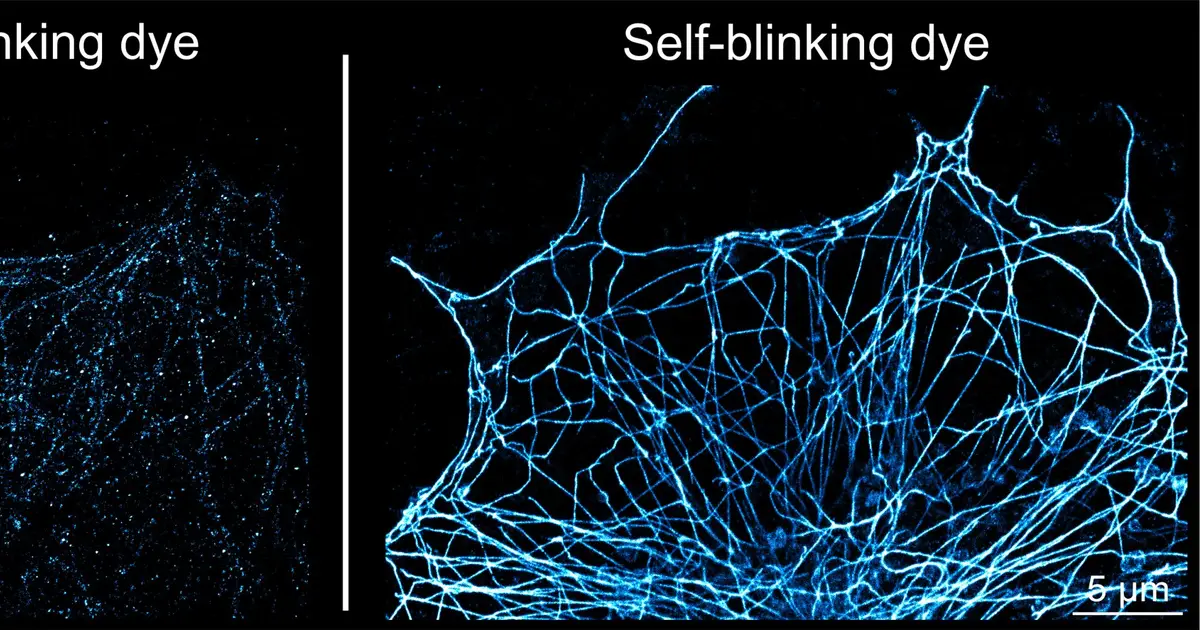
Nanobodies are extremely small antibody fragments that bind to specific molecules. When nanobodies are labeled with dyes, they can be used as probes to enhance super-resolution microscopy.

Summary
Nanobodies are extremely small antibody fragments that bind to specific molecules. When nanobodies are labeled with dyes, they can be used as probes to enhance super-resolution microscopy. However, conventional blinking dyes often perform poorly when attached to nanobodies, limiting their practical advantages. An international research team led by the University of Göttingen and the University Medical Center Göttingen (UMG) has now shown that self-blinking dyes—which can switch between bright and dark states on their own—bypass this limitation.
AI summaries can be wrong sometimes—always verify important details using the source article.
How AI & Automation are usedMore from Science
Continue reading recent Science coverage
- NYC congestion pricing policy linked to cleaner air in lower ManhattanContinue reading
- DNA From a Human Brain Gene Has Turned Up In a VirusContinue reading
- Undergraduate student may have solved puzzle regarding isolated galaxies that have stopped producing starsContinue reading
- Acoustic experiments confirm topology can persist at gapless critical pointsContinue reading
Support HappeningNow
Independent AI-powered news analysis is reader-supported. Your contribution helps cover infrastructure, summaries, and continued platform development.
Support HappeningNow