
Science · 4 views
Scientists discover twist-tunable interlayer excitons in atomically thin anisotropic semiconductors
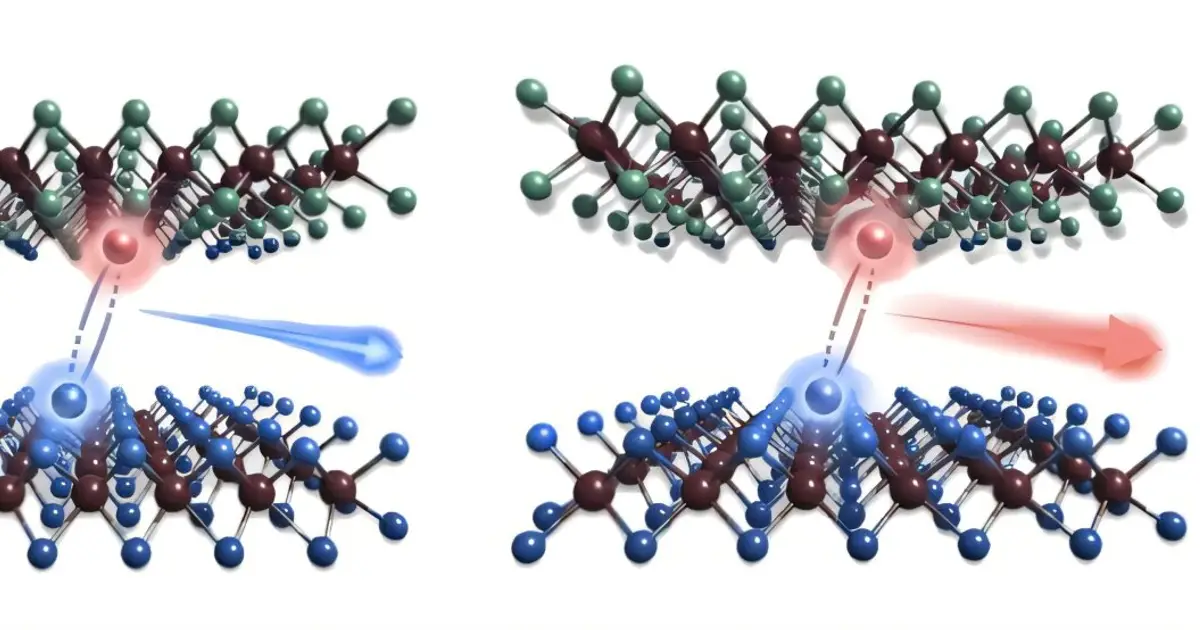
When light shines on a semiconductor, negatively charged electrons and positively charged holes—empty states left behind when electrons move away—pair up and bind together. This bound state is called an exciton.

Summary
When light shines on a semiconductor, negatively charged electrons and positively charged holes—empty states left behind when electrons move away—pair up and bind together. This bound state is called an exciton. When two atomically thin semiconductor layers are stacked, electrons and holes can reside in different layers, forming what is known as an interlayer exciton (IE).
AI summaries can be wrong sometimes—always verify important details using the source article.
How AI & Automation are usedMore from Science
Continue reading recent Science coverage
- What is the Riemann hypothesis and why is its solution so monumental?Continue reading
- Gamified mobile payment features may drive adoption among Gen-Z usersContinue reading
- Scientists Discover a Hidden Heart Signal That Can Predict Sudden Cardiac DeathContinue reading
- Watching as a giant star swallowed its neighbor and explodedContinue reading
Support HappeningNow
Independent AI-powered news analysis is reader-supported. Your contribution helps cover infrastructure, summaries, and continued platform development.
Support HappeningNow