
Health · 40 views
Rare antibodies with potential to combat alpha-gal syndrome identified
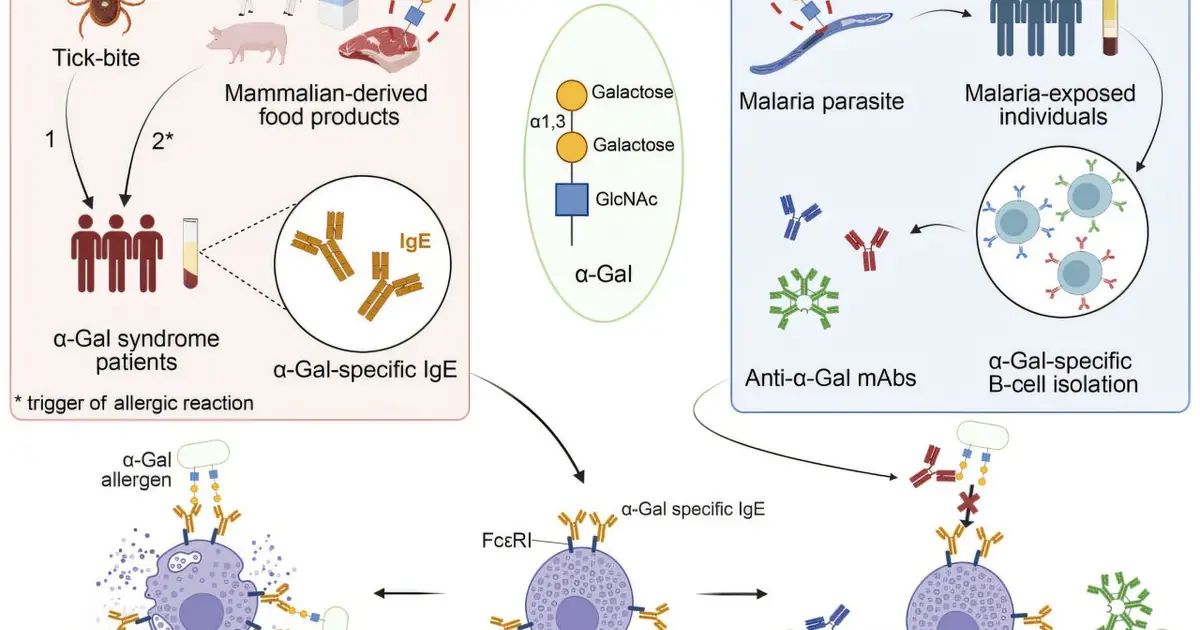
National Institutes of Health (NIH) researchers have discovered rare antibodies that could inform the development of an intervention for alpha-gal syndrome (AGS), an emerging tick bite-associated condition that can lead to allergic…

AI Summary
NIH researchers identified rare monoclonal antibodies that can block human allergic antibodies from binding to red‑meat allergens linked to alpha‑gal syndrome (AGS), an emerging tick‑bite condition. Laboratory tests showed the antibodies act as a biological shield, preventing the allergic reaction to the alpha‑gal molecule found in non‑primate mammal products. The discovery, reported in the Journal of Clinical Investigation, is described by NIH’s acting NIAID director as the first step toward potential prevention strategies and targeted therapies for AGS, which currently has no specific treatment beyond avoiding red meat.
AI summaries can be wrong sometimes—always verify important details using the source article.
How AI & Automation are usedMore from Health
Continue reading recent Health coverage
- Scientists propose national microbiome plan to prevent chronic diseaseContinue reading
- Study finds patients experienced rapid weight gain after starting antipsychotic medicationContinue reading
- Multiple Sclerosis Anti-CD20 Drug Linked to Bowel Disease RiskContinue reading
- Anxiety builds over Medicaid work requirementsContinue reading
Support HappeningNow
Independent AI-powered news analysis is reader-supported. Your contribution helps cover infrastructure, summaries, and continued platform development.
Support HappeningNow