
Science · 2 views
Optical imaging links altered metabolism and oxygen use in Alzheimer's disease
Alzheimer's disease is best known for its effects on memory and cognition, but the disease also involves changes in how brain cells produce and use energy.

AI Summary
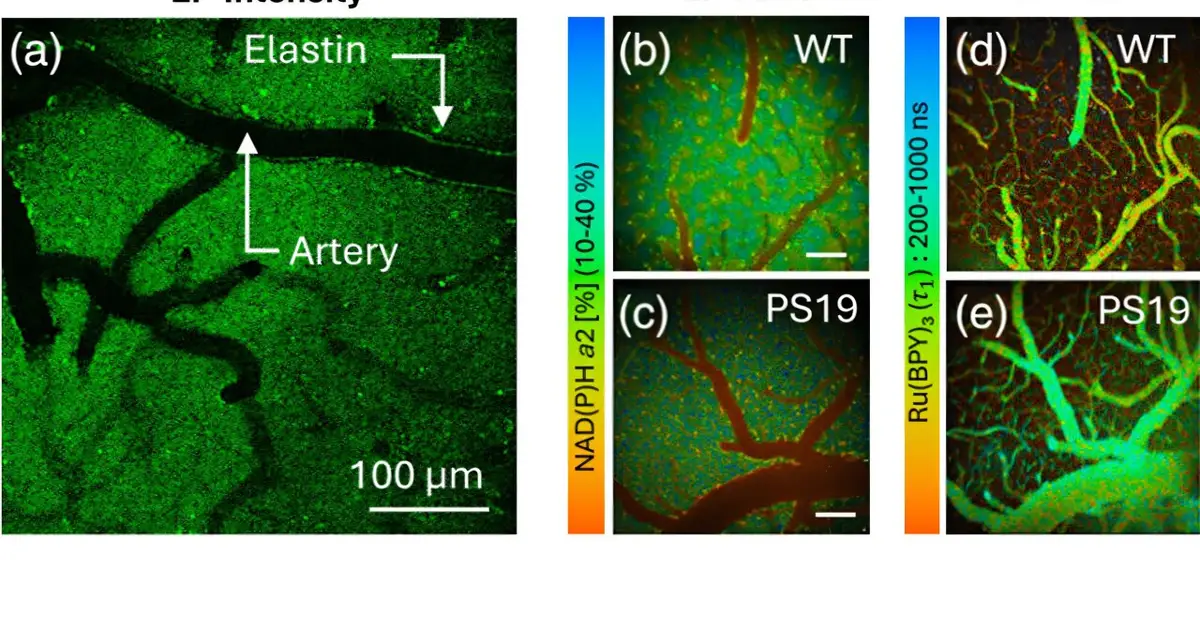
Researchers at the University of Virginia used two-photon lifetime microscopy to simultaneously measure cellular metabolism and oxygen levels in the cerebral cortex of mice. The study compared Alzheimer’s disease model mice with healthy, wild‑type controls. Findings showed that mitochondria in the disease model were dysfunctional, while altered blood flow and oxygen availability added extra demands on brain tissue. The combined imaging approach highlights how energy production and oxygen use are disrupted together in Alzheimer’s, offering a new way to characterize metabolic changes in the living brain.
AI summaries can be wrong sometimes—always verify important details using the source article.
How AI & Automation are usedMore from Science
Continue reading recent Science coverage
- Physicists Simulated What Might Happen When Two Wormholes Collide, And Things Got WeirdContinue reading
- How animal identifiability affects children's food choicesContinue reading
- Cat Owners: There's a Parasite You've Probably Never Heard Of, And It's More Common in WinterContinue reading
- After 40 Years, Chornobyl's Radioactive Particles Are Surprisingly StableContinue reading
Support HappeningNow
Independent AI-powered news analysis is reader-supported. Your contribution helps cover infrastructure, summaries, and continued platform development.
Support HappeningNow