
Science · 5 views
New quasar record tightens constraints on black hole formation scenarios
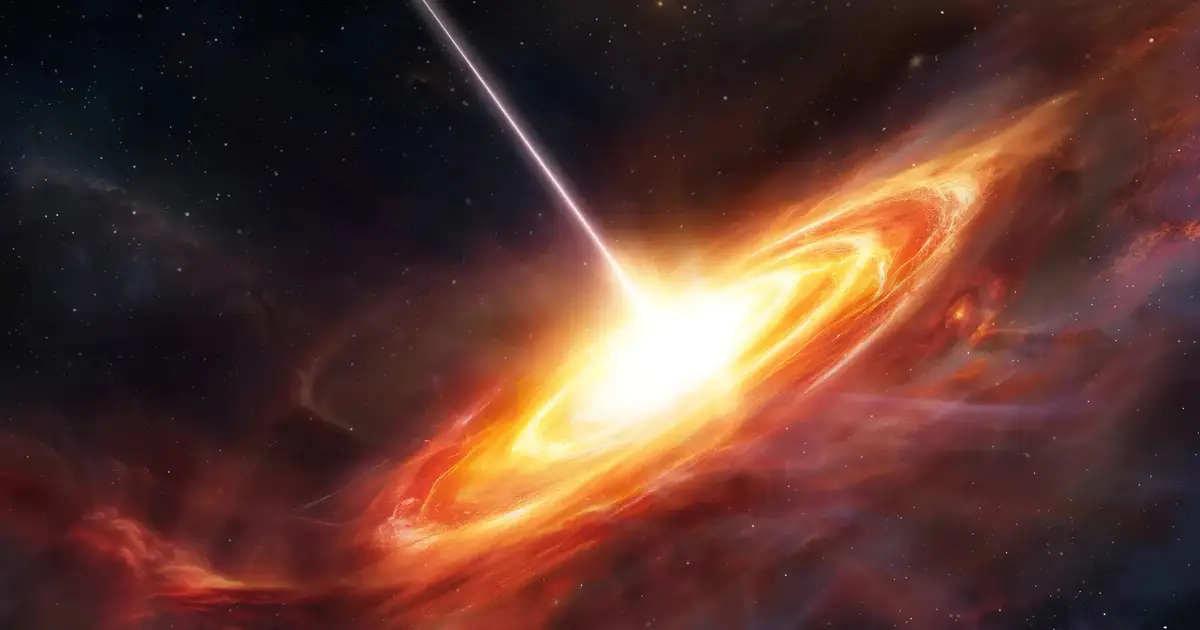
A team of astronomers led by Julien Wolf, a postdoctoral researcher at the Max Planck Institute for Astronomy (MPIA) in Heidelberg, Germany (now at the European Southern Observatory in Garching bei München, Germany), discovered the most…

AI Summary
Astronomers led by Julien Wolf discovered the most distant quasar yet, first spotted in the Euclid Wide Survey. Follow‑up observations with the W. M. Keck Observatory and the Hubble Space Telescope identified it as a quasar, and further data from the Large Binocular Telescope and the James Webb Space Telescope measured a redshift of z = 8.13. This redshift places the quasar at a cosmic age of 630 million years after the Big Bang, tightening constraints on models of early black‑hole formation.
AI summaries can be wrong sometimes—always verify important details using the source article.
How AI & Automation are usedMore from Science
Continue reading recent Science coverage
- The technology that could make government internet blackouts impossibleContinue reading
- NASA Spots Bizarrely Neat Rows of Boulders on Mars. Scientists Can't Explain Them.Continue reading
- Giant Study Finds Ice Baths Can Relieve Sore Muscles – But There's a Hidden CostContinue reading
- Funding must work better for SMEs to tackle energy challenges, finds researchContinue reading
Support HappeningNow
Independent AI-powered news analysis is reader-supported. Your contribution helps cover infrastructure, summaries, and continued platform development.
Support HappeningNow