
Science · 4 views
Microscopic chambers reveal how bacteria navigate tight spots
New York University researchers have built a way to observe bacteria as they typically live: in confinement.

AI Summary
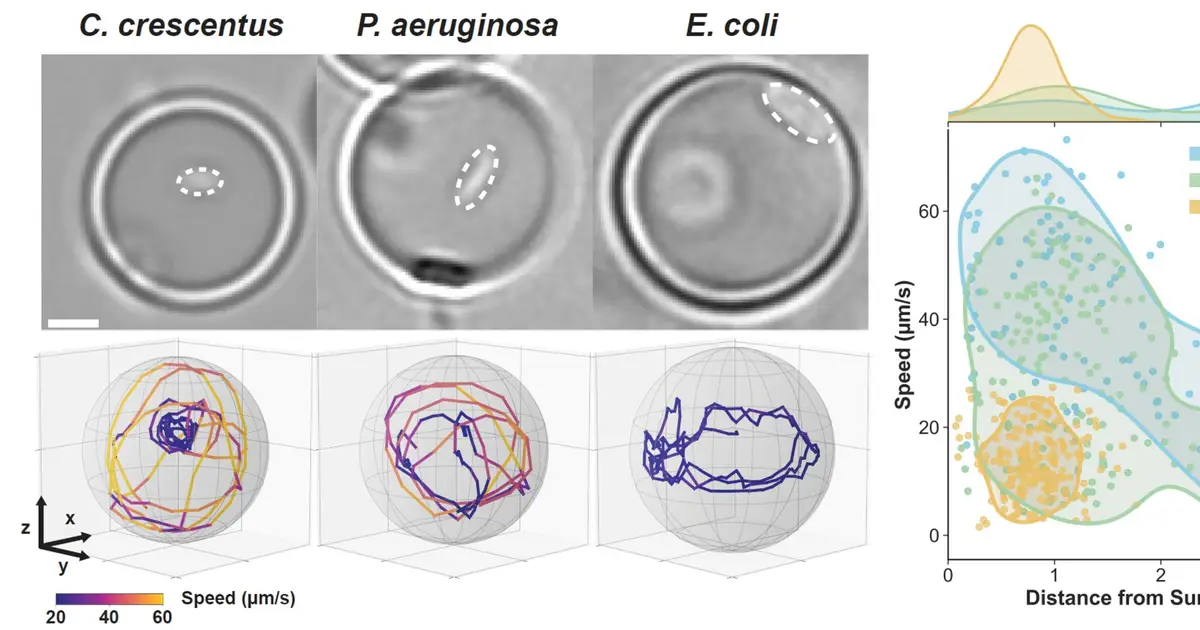
New York University researchers created microscopic traps that replicate the tight crevices where bacteria normally reside, such as in soil or the human mouth. The traps allow scientists to observe bacterial behavior in confinement, a setting that closely matches natural habitats. The study, published in the journal Small, demonstrates that the engineered chambers can mimic the physical constraints bacteria encounter in real environments. This approach provides a new platform for studying bacterial navigation and interactions within confined spaces.
AI summaries can be wrong sometimes—always verify important details using the source article.
How AI & Automation are usedMore from Science
Continue reading recent Science coverage
- New modeling tool sheds light on how climate change could reshape marine ecosystemsContinue reading
- How self-perception influences the way women view sexualized imagesContinue reading
- Submarine finds world’s deepest explosive volcanic activity in Mariana trenchContinue reading
- Iron single-atom nanozymes enable sustainable catalysis for tumor therapyContinue reading
Support HappeningNow
Independent AI-powered news analysis is reader-supported. Your contribution helps cover infrastructure, summaries, and continued platform development.
Support HappeningNow