
Science · 27 views
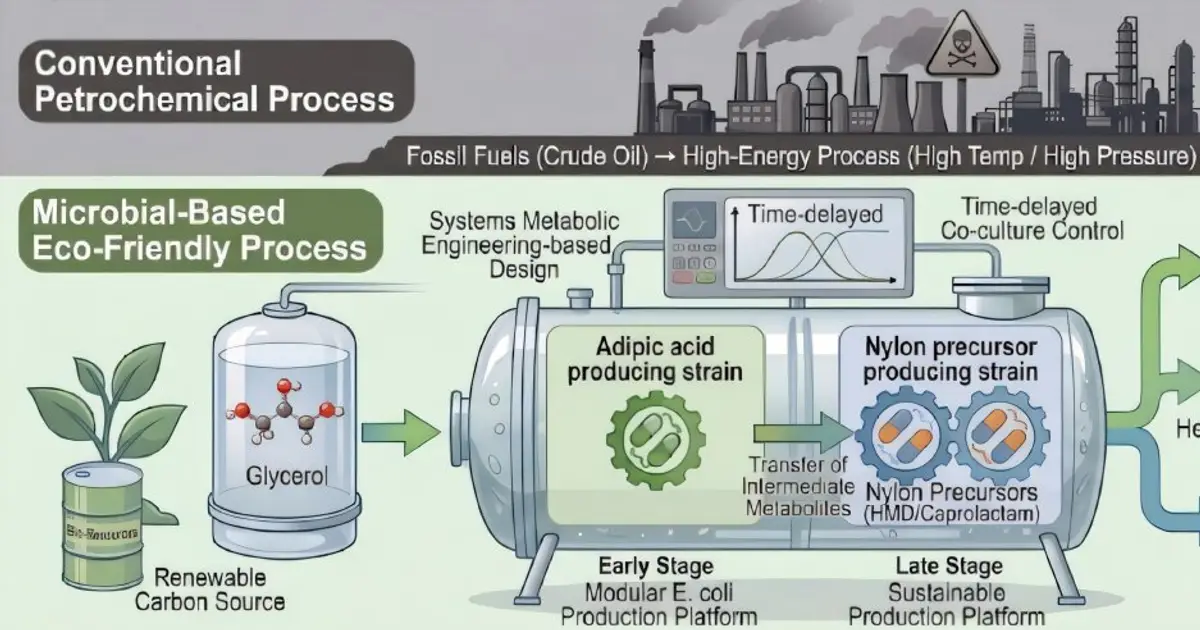
Microbes turn biodiesel byproduct into three nylon building blocks, opening greener route
Nylon is a representative plastic material used throughout our daily lives, from clothing to automobiles. However, most of its raw materials have been produced through petrochemical processes, resulting in large carbon emissions.

AI Summary
Researchers at KAIST have discovered a method to convert a byproduct of biodiesel production into the building blocks of nylon. This process utilizes microbes to transform the byproduct into three essential components necessary for nylon synthesis. The significance of this development lies in its potential to reduce the environmental impact of nylon production. Currently, most nylon raw materials are derived from petrochemical processes, resulting in significant carbon emissions. This breakthrough could provide a more sustainable route for nylon production, aligning with growing efforts to minimize the environmental footprint of industrial processes.
AI summaries can be wrong sometimes—always verify important details using the source article.
How AI & Automation are usedMore from Science
Continue reading recent Science coverage
- Grass and clover can provide more than animal feedContinue reading
- Physicists Build a 'Mad-Scientist' Antimatter Beam to Test Einstein's Theory of General RelativityContinue reading
- When prepping for disaster, don't forget to pack your teddy bearContinue reading
- Museums on prescription: How cultural activities are becoming crucial to the public health debateContinue reading
Support HappeningNow
Independent AI-powered news analysis is reader-supported. Your contribution helps cover infrastructure, summaries, and continued platform development.
Support HappeningNow