
Health · 3 views
Longer inhibitory connections can push simulated neural networks beyond critical tipping point
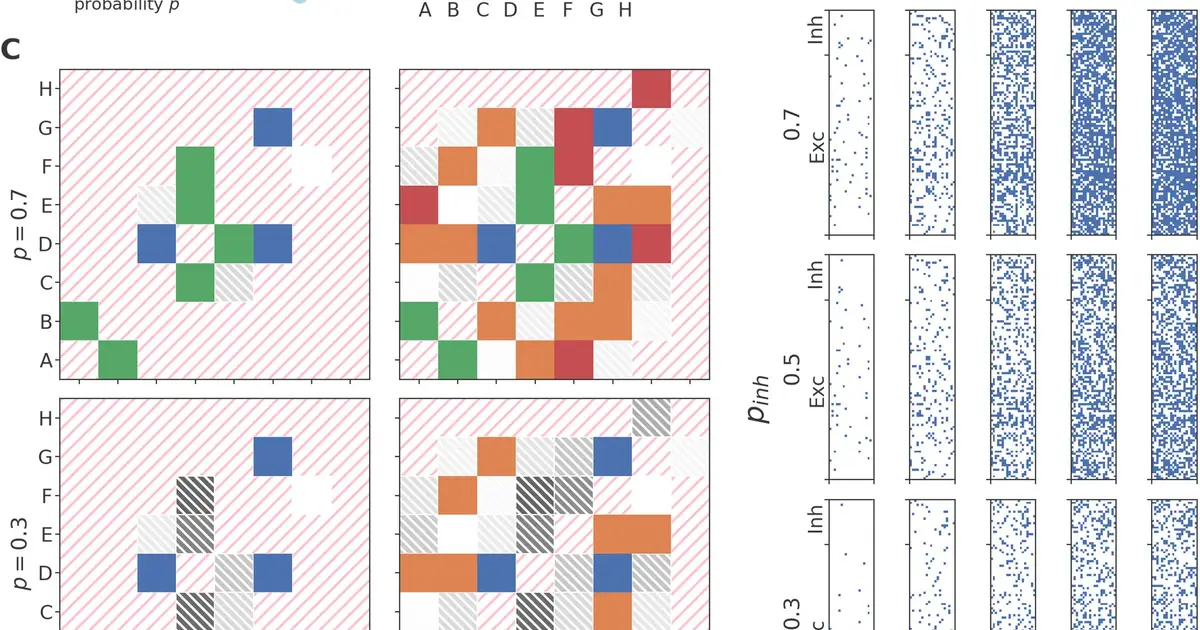
In neuroscience, the brain criticality hypothesis proposes that neurons in the brain are arranged in such a way that neural activity lies at or near a transition point between two extremes: an ordered state where neural activity dies out…

Summary
In neuroscience, the brain criticality hypothesis proposes that neurons in the brain are arranged in such a way that neural activity lies at or near a transition point between two extremes: an ordered state where neural activity dies out quickly and a disordered state where neural activity tends to spread quickly and potentially grow uncontrollably. This transition point is known as criticality, while the two activity regimes on either side of it are known as subcritical and supercritical, respectively.
AI summaries can be wrong sometimes—always verify important details using the source article.
How AI & Automation are usedMore from Health
Continue reading recent Health coverage
- Forever chemical disturbs early development in stem cell modelContinue reading
- Early changes linked to ovarian cancer may leave a trace in the blood—new studyContinue reading
- Trial on Statins for Cirrhosis Won't End Debate Anytime SoonContinue reading
- Drug safety information must remain accessible as patients move from websites to AIContinue reading
Support HappeningNow
Independent AI-powered news analysis is reader-supported. Your contribution helps cover infrastructure, summaries, and continued platform development.
Support HappeningNow