
Health · 2 views
Liver cells activate scarring-linked genes in stiff surroundings but favor repair signals in softer conditions
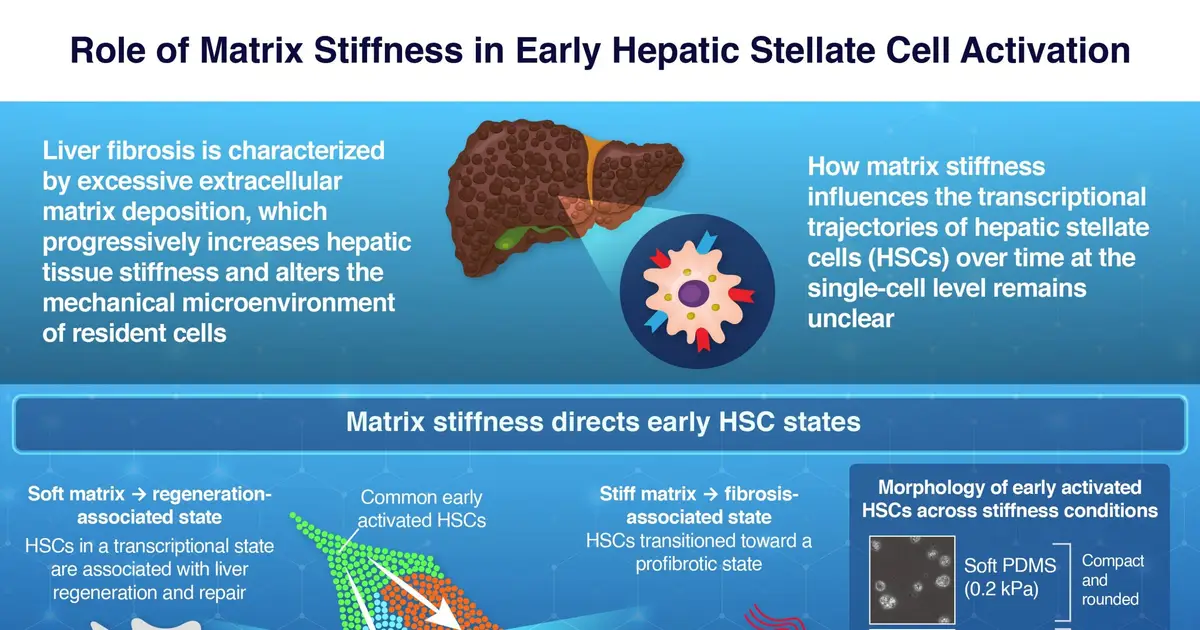
Soft and stiff extracellular matrix environments influence how hepatic stellate cells (HSCs) respond during liver injury. Researchers from Science Tokyo investigated how matrix stiffness shapes the direction of HSC activation.

AI Summary
Researchers from Science Tokyo studied how the stiffness of the extracellular matrix affects hepatic stellate cells (HSCs) during liver injury. In soft matrix environments, HSCs adopted regeneration‑associated cellular states, whereas stiff matrices induced expression of fibrosis‑associated genes. The team identified a gene‑expression program called HSC Early_Hard_Signature that correlates with cirrhosis severity and disease progression. This signature may serve as a biomarker and guide future therapeutic strategies for chronic liver disease.
AI summaries can be wrong sometimes—always verify important details using the source article.
How AI & Automation are usedMore from Health
Continue reading recent Health coverage
- First results published from the largest brain atlas ever createdContinue reading
- Brain scans reveal two regions that shrink before the hippocampus in Alzheimer'sContinue reading
- The U.S. Just Lost Its Measles Elimination Status. Here's How to Get It Back.Continue reading
- Can Adjuvant Pembrolizumab Improve Outcomes in Triple-Negative Breast Cancer?Continue reading
Support HappeningNow
Independent AI-powered news analysis is reader-supported. Your contribution helps cover infrastructure, summaries, and continued platform development.
Support HappeningNow