
Science · 39 views
Identical vesicles, different behaviors: Model reveals how spontaneous asymmetry gives rise to lifelike behavior
In nonreciprocal active matter, agents act differently on each other, seemingly in violation of Newton's third law.
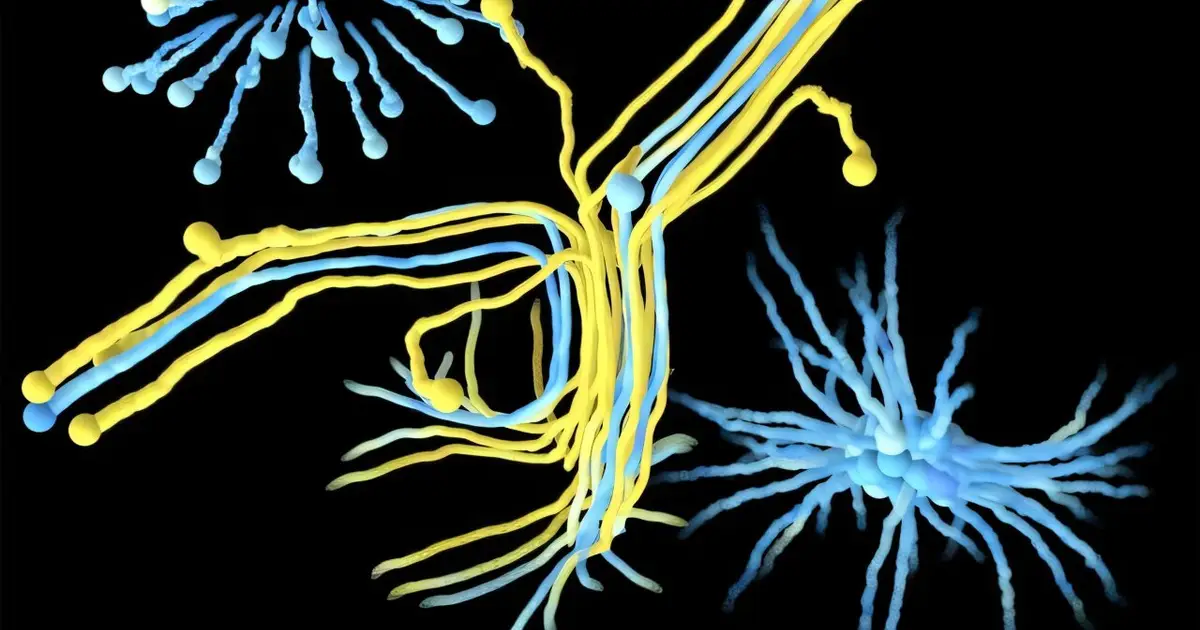

Summary
In nonreciprocal active matter, agents act differently on each other, seemingly in violation of Newton's third law. This principle can result in various active matter traits, such as self-propulsion, molecular regulation and collective motion. A new model describes how such nonreciprocal interactions can emerge spontaneously between chemically active vesicles. Physicists from the Department of Living Matter Physics at the Max Planck Institute for Dynamics and Self-Organization (MPI-DS) found that such vesicles can dynamically switch between ignoring, attracting, repelling and chasing each other.
AI summaries can be wrong sometimes—always verify important details using the source article.
How AI & Automation are usedMore from Science
Continue reading recent Science coverage
- A 'simple recipe' takes some of the guesswork out of mass spectrometry imagingContinue reading
- Counteranion captures reactants to boost light-driven chemistry in dilute solutionsContinue reading
- Mice With Parkinson's-Like Brain Changes Unexpectedly Recovered a Year LaterContinue reading
- Extreme risk protection orders are designed to prevent gun violence. But how do they impact the people subject to them?Continue reading
Support HappeningNow
Independent AI-powered news analysis is reader-supported. Your contribution helps cover infrastructure, summaries, and continued platform development.
Support HappeningNow