
Science · 45 views
Heat-stressed cells use nuclear stress bodies to restart RNA splicing, study finds
If you want to beat the heat of the summer sun, slowing down and doing less is a good strategy. However, researchers have long asked whether the same occurs at the cellular level.

AI Summary
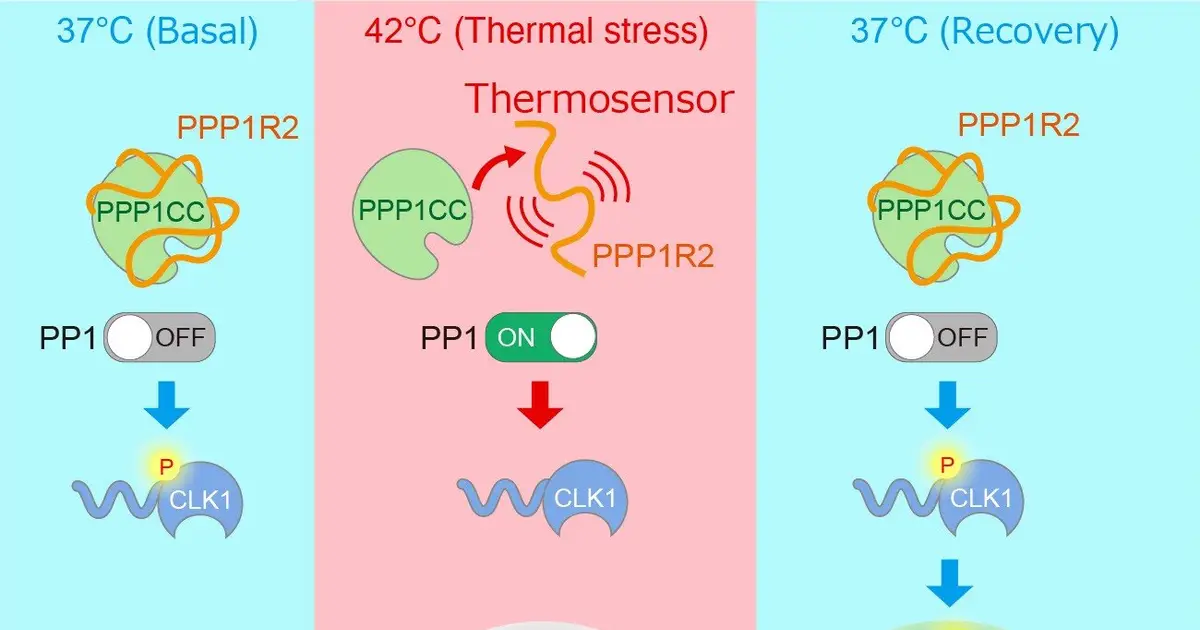
Researchers at Japan’s University of Osaka have identified a mechanism by which cells respond to high temperatures. Their study, published in Molecular Cell, shows that nuclear stress bodies act as temperature sensors that temporarily shut down nonessential cellular functions during heat stress. By doing so, these structures help cells survive the stressful conditions and later resume normal activity during recovery. The findings reveal a new layer of cellular regulation linked to environmental temperature.
AI summaries can be wrong sometimes—always verify important details using the source article.
How AI & Automation are usedCoverage Context
More from Science
Continue reading recent Science coverage
- Elections are more predictable than they lookContinue reading
- Inside the Pentagon, the pressure is on to find a home for a new spaceportContinue reading
- Tiny Genetic Tweak From An Ancient Virus Might've Prevented Chimpanzees From Developing Brains Like OursContinue reading
- Crows can evaluate visual info twice as fast as mammalsContinue reading
Support HappeningNow
Independent AI-powered news analysis is reader-supported. Your contribution helps cover infrastructure, summaries, and continued platform development.
Support HappeningNow