
Health · 4 views
First-in-human study of dual-imaging catheter to assess heart attack risk, guide treatment
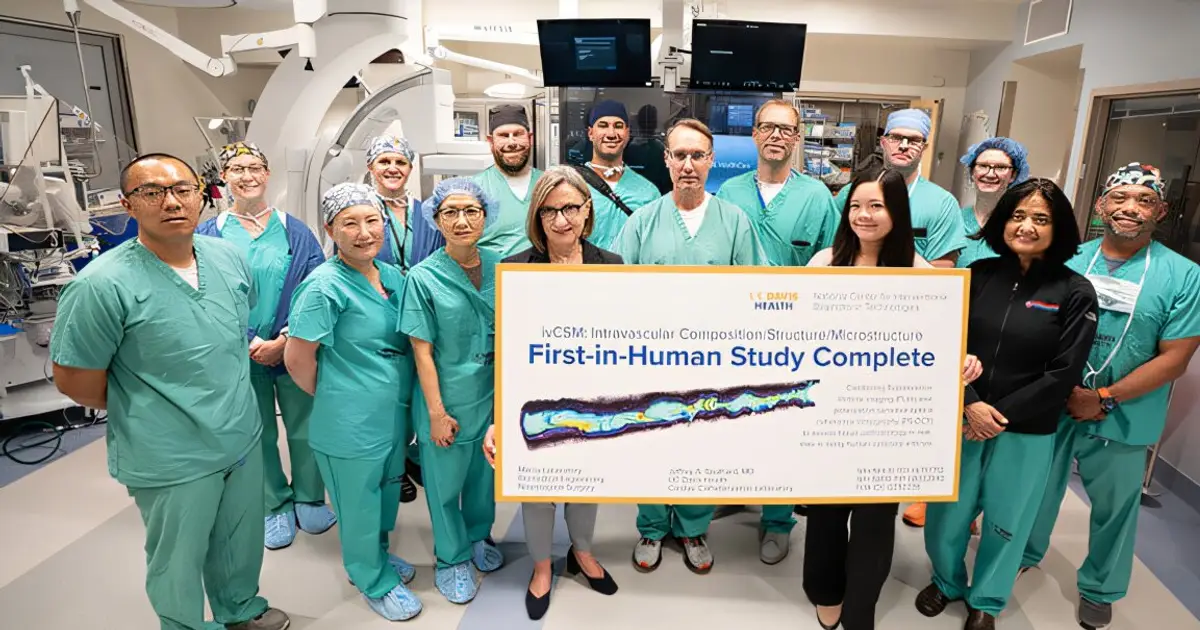
Researchers at the UC Davis National Center for Interventional Biophotonic Technologies (NCIBT) have concluded the first-in-human test of a new device that could help doctors better detect and treat atherosclerosis, the narrowing of blood…

AI Summary
Researchers at UC Davis’s National Center for Interventional Biophotonic Technologies completed the first‑in‑human trial of a flexible, catheter‑based imaging device designed to navigate artery walls and capture real‑time details of plaque buildup. The dual‑imaging catheter aims to improve detection of atherosclerosis and guide personalized treatment of cardiovascular disease. Founding director Laura Marcu highlighted the test as a major step toward advancing heart health and better understanding disease progression. The study marks the initial human evaluation of the technology developed in NCIBT labs.
AI summaries can be wrong sometimes—always verify important details using the source article.
How AI & Automation are usedMore from Health
Continue reading recent Health coverage
- Not Just Moms Who Put Unvaccinated Infants at Risk of Hepatitis B, Study ShowsContinue reading
- Study Supports Starting HPV Vaccination at a Younger AgeContinue reading
- An extra serving of fruit linked to lower risk of depression and anxiety in teenagersContinue reading
- Five at-home strength moves that can make everyday tasks easierContinue reading
Support HappeningNow
Independent AI-powered news analysis is reader-supported. Your contribution helps cover infrastructure, summaries, and continued platform development.
Support HappeningNow