
Science · 2 views
Filling the gaps in global rainfall maps
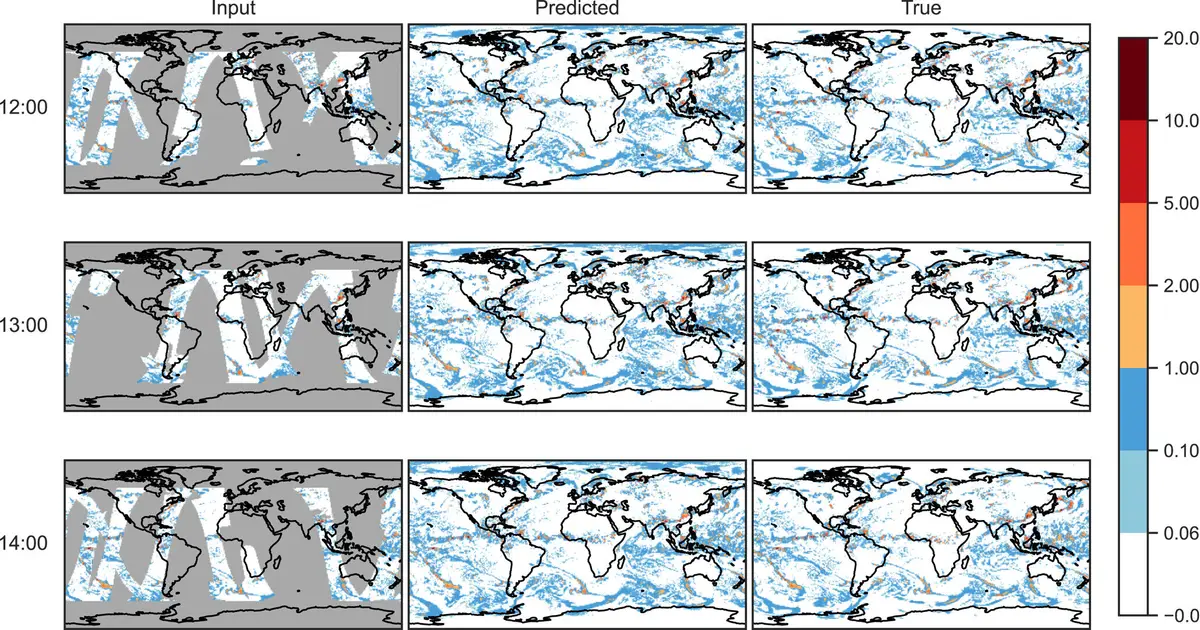
Global rainfall maps are built from observations collected by multiple satellites, but they have an important limitation. The satellites that provide these measurements cannot see the whole Earth at once.

Summary
Global rainfall maps are built from observations collected by multiple satellites, but they have an important limitation. The satellites that provide these measurements cannot see the whole Earth at once. As a result, some regions of these maps can have no valid observations. Current methods try to fill these gaps by estimating precipitation values from observations made before and after the missing period.
AI summaries can be wrong sometimes—always verify important details using the source article.
How AI & Automation are usedMore from Science
Continue reading recent Science coverage
- Water as we've never known it: Physicists test water beyond Earth-like conditionsContinue reading
- How the aftermath of negotiations turns 'winners' into 'losers,' and vice versaContinue reading
- Quantum error correction goes well beyond breakevenContinue reading
- Steering electrons with extreme ultraviolet light—team achieves quantum coherent controlContinue reading
Support HappeningNow
Independent AI-powered news analysis is reader-supported. Your contribution helps cover infrastructure, summaries, and continued platform development.
Support HappeningNow